
Why Is My Cat Pooping Outside the Litter Box?
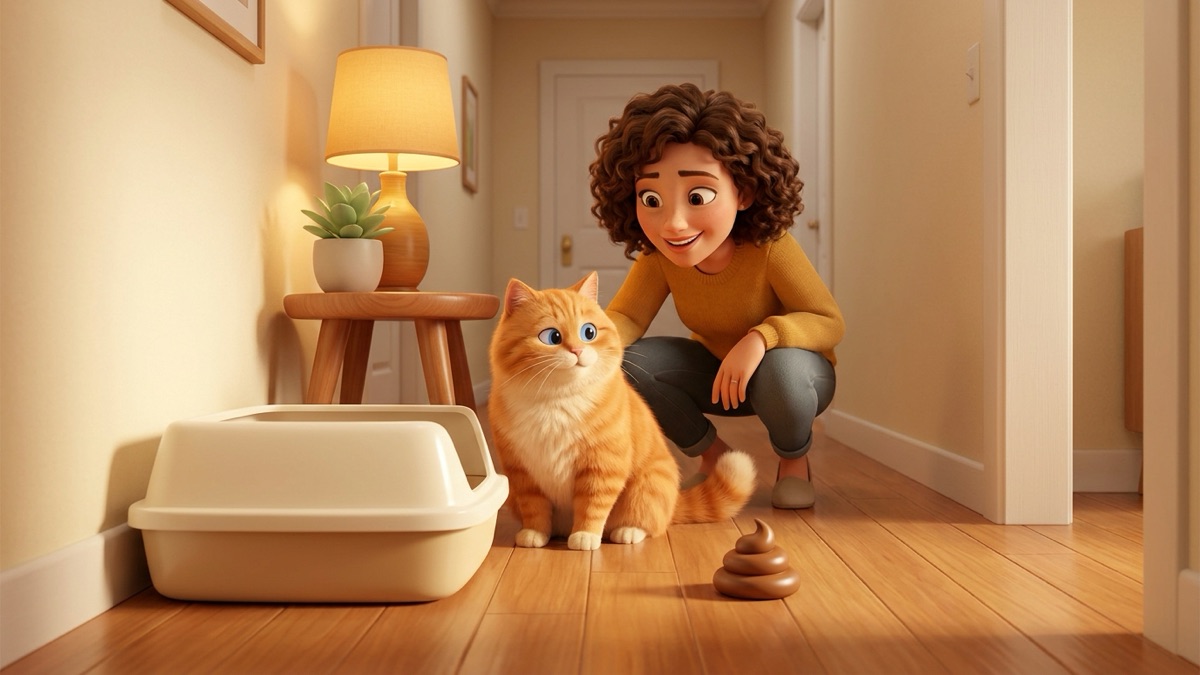
It is 2am, you stepped in it, and it was not in the box. Or it was right beside the box, which somehow feels worse. Cats do not poop out of spite. Something has changed, and the poop is how they are telling you.
Quick answer
A cat pooping outside the litter box usually has a medical reason, a box problem, or a stress problem, in that order. Constipation, diarrhea, sore joints and urinary trouble come first, so a sudden change is a same-day call to your vet. Then check the box: one per cat plus one, scooped daily, big and unscented.
Scout's read
A cat who suddenly starts pooping outside the box gets a vet check first, because sick cats often look fine. A cat, especially a male, straining in or near the box with little or nothing coming out is Call a vet now.
Key takeaways
- Rule out a medical cause first. Constipation, diarrhea, arthritis and urinary disease are the big four, and most are invisible until the box tells you.
- Straining with nothing coming out, especially in a male cat, can be a urinary blockage. That is Call a vet now, not tomorrow.
- Most cats want a box that is big, open, unscented, scooped daily and in a quiet spot. One box per cat, plus one.
- Pooping beside the box usually means "I tried." Pooping on soft things or in a new corner often means stress or pain.
- Never punish. It does not work, it adds stress, and stress is one of the causes.
Cat not using the litter box: check for a medical reason first
Vets put this step first for a simple reason: cats hide illness well, and the litter box is often the first place it shows. A cat who poops outside the box may be saying that pooping hurts, that she could not hold it, or that she could not reach the box in time.
Constipation
A constipated cat strains, cries, goes in and out of the box, and passes small, hard, dry pieces or nothing at all. Many cats start to link the box with the pain and move somewhere else. A little liquid or blood around a hard mass can look like diarrhea but is the opposite. Most cats poop about once a day, so no poop for 2 to 3 days is a call to your vet. Our guides to cat not pooping and cat straining to poop walk through it in detail.
Diarrhea
A cat with loose stool often cannot wait. Soft piles, puddles, or stool with mucus or blood are a gut problem first and a box problem second. Diarrhea past 24 to 48 hours, or with vomiting, a poor appetite or low energy, is a call to your vet today. Parasites that a routine fecal test misses, such as Tritrichomonas, are a common hidden cause in young cats. Read cat diarrhea: when to wait and when to call.
Arthritis and pain
Joint pain is common in older cats, and most of them never limp. They just stop climbing: onto the bed, onto the windowsill, and over the side of the litter box. A cat who used to go upstairs to the box and now poops in the hall may simply not manage the trip. An anal sac problem hurts from the other end: scooting, licking under the tail, and holding off pooping. Both are reasons to see the vet and to add a low-sided box on every floor.
Urinary disease
This one is the emergency. Bladder inflammation or crystals make a cat strain in the box, go often, pass tiny amounts, and sometimes cry out. From across the room, that looks exactly like constipation. If the urethra blocks, which happens mostly in male cats, urine cannot leave the body and the cat can die within a day or two. A cat who keeps squatting with little or nothing coming out is Call a vet now, whether you think it is poop or pee.
| What you see | What it can mean | Verdict |
|---|---|---|
| Straining, crying, nothing or almost nothing comes out | Urinary blockage, or severe constipation | Call a vet now |
| Small, hard, dry pieces, or no poop for 2 to 3 days | Constipation | Call your vet today |
| Soft piles or puddles, often with mucus or blood | Diarrhea, an irritated gut, parasites | Call your vet today |
| Normal poop, but in a new place, in an older cat | Joint pain, trouble reaching or climbing into the box | Call your vet today |
| Normal poop, cat otherwise well, an obvious box or stress change | Box setup or stress | Fix the box; Keep an eye once the vet has cleared her |
Heads up
A cat, especially a male, who keeps going back to the box and strains with little or nothing coming out may have a urinary blockage. It looks like constipation and can kill within a day or two. Call a vet or emergency clinic now.
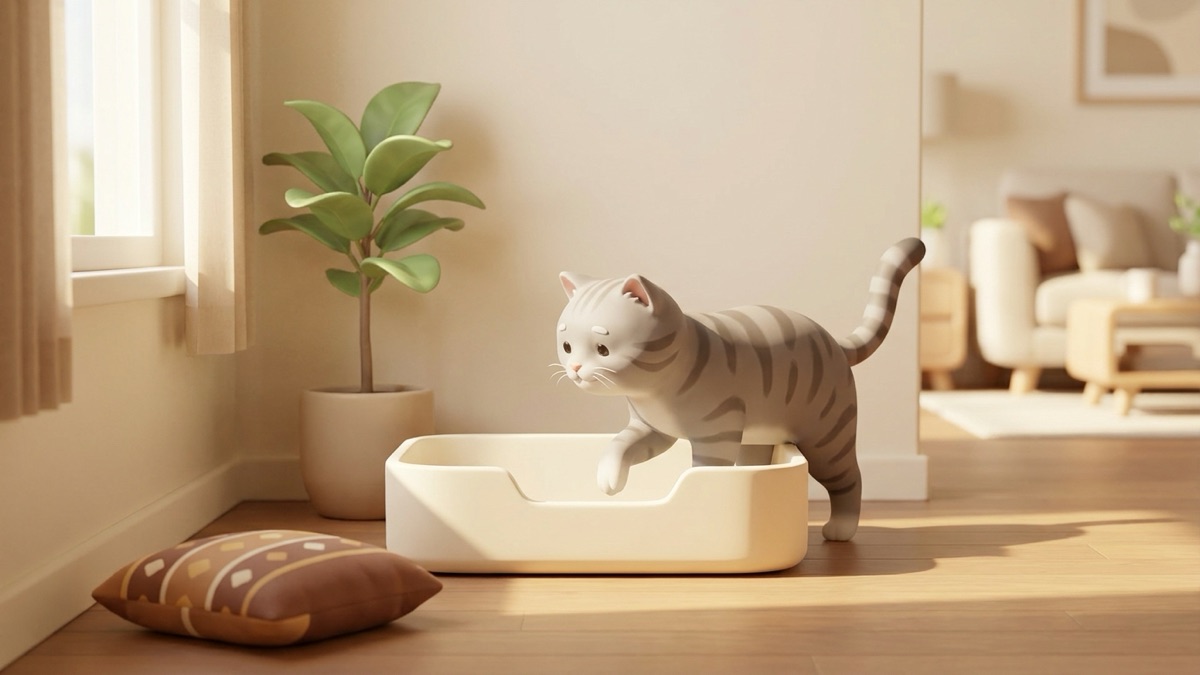
Why is my cat pooping on the floor? Read the clues
Where the poop lands, and what it looks like, narrows things down fast.
| Where it is | What it often means |
|---|---|
| Right beside the box, or just outside the door | The cat tried. The box is too small, too dirty, too high to climb, or pooping in it has hurt before. |
| On the bed, a rug, a pile of laundry | Soft, absorbent, smells of you. Stress and anxiety, or a cat who wants a safer-feeling spot. See why your cat pooped on the bed. |
| In a corner far from the box, every time | The cat has chosen a new toilet. Often the box location, or a block on the route (another cat, a loud appliance, stairs). |
| Random spots, loose stool, sometimes a trail | Diarrhea, or a cat who could not hold it. Gut problem first. |
Look at the poop itself too. On the 1 to 7 stool scale, a 2 is ideal: firm, segmented and easy to scoop. A 1 is hard pellets, a 6 is piles with no shape, and a 7 is water. Anything off 2 or 3 points to the gut, not the box.
Try it
Not sure whether tonight's accident is a vet question or a box question? Answer a few questions about what you saw and how your cat is acting in our should I call the vet checker. It uses the same four verdicts as this guide.
Cat keeps pooping beside the litter box
A cat who poops a few inches from the box wanted to use it. Something stopped her at the last second. Vets and behaviorists see a few patterns:
- The box is too small. The feline veterinary associations' guidelines say a box should be about one and a half times the length of your cat from nose to the base of the tail, and most boxes sold for cats are smaller than that. A large plastic storage tub with a low cut-out often works better.
- The box is dirty. A cat that pees in the box but poops beside it is often saying the box is fine for one job and too full for the other. Scoop at least once a day.
- The sides are too high. Kittens, older cats and any cat with sore joints need a low entry.
- It hurt last time. A cat who strained or passed a painful stool in the box can decide the box did it. Beside the box is her compromise. Vet visit first, then a fresh box once she is comfortable again.
- A hood or a liner. Covered boxes trap smell inside and let another cat trap the cat. Liners catch claws. Try an open box.
Good to know
Pee in the box, poop beside it, is a pattern vets hear about often, and it usually comes down to size, cleanliness or pain rather than behavior.
Fix the box: what most cats actually want
Once the vet has ruled out pain and illness, or while you wait for the appointment, go through the box the way a picky cat would. These are the recommendations in published feline house-soiling guidelines, not folklore.
How many boxes
One per cat, plus one, in different places. Two cats, three boxes. Even a single cat does better with two. Boxes lined up next to each other count as one big box to a cat.
Scoop every day
Remove poop and clumps at least once a day, top up litter as needed, and wash the whole box every week or two with mild soap and water. Skip cleaners with ammonia or strong scents. If you can smell the box, your cat smelled it long ago.
Size and shape
Bigger is better, and most boxes are too small. Aim for one and a half times your cat's length, rectangular, open, with low sides for kittens, seniors and sore cats. If yours has a lid, take it off for a week and see what changes.
Location
Quiet, private, easy to reach at any hour, and away from food and water. Not next to the washing machine, not in a dead end where another cat can block the exit, and not down a flight of stairs an old cat cannot manage. One box on every floor the cat uses.
Litter type
Most cats prefer fine, sand-like, unscented clumping litter, one to two inches deep. Scented litter is for people. Cats also dislike sudden changes, so if you need to switch, mix the new litter in gradually or offer it in a second box and let your cat vote.
Tip
Set up a second box somewhere new with a different litter and depth, and leave both for two weeks. Your cat will tell you which one she prefers by using it.
Stress, changes and other cats
If the vet visit is clear and the box is right, think about what changed. Cats run on routine, and the box is where they show you when it broke. Common triggers:
- A new cat, dog, baby or partner in the house.
- Building work, a move, new furniture, or even a new rug in the box room.
- A cat outside the window, which can push an indoor cat to mark or hide.
- Tension between cats. One cat blocking the route to the box, or ambushing another on the way out, is enough to make the second cat find a safer toilet.
- A change in your schedule, so the box is scooped later.
The fixes are mostly about safety and choice: more boxes in more places so no one cat controls them, open boxes with a clear view, quiet routes, and time. Your vet can talk you through calming aids, and for a genuinely anxious cat a referral to a veterinary behaviorist is a normal next step.
Clean old spots properly. Cats return to places that smell like a toilet, so wash the area with an enzyme-based cleaner and avoid anything with ammonia, which smells like urine to a cat. If a spot keeps getting used, put a box there, then move it a little each day toward where you want it.
Heads up
Never punish a cat for pooping outside the box, and never push her nose in it. She will not connect the two. Punishment adds fear, fear adds stress, and stress is one of the causes you are trying to remove.
What to do today
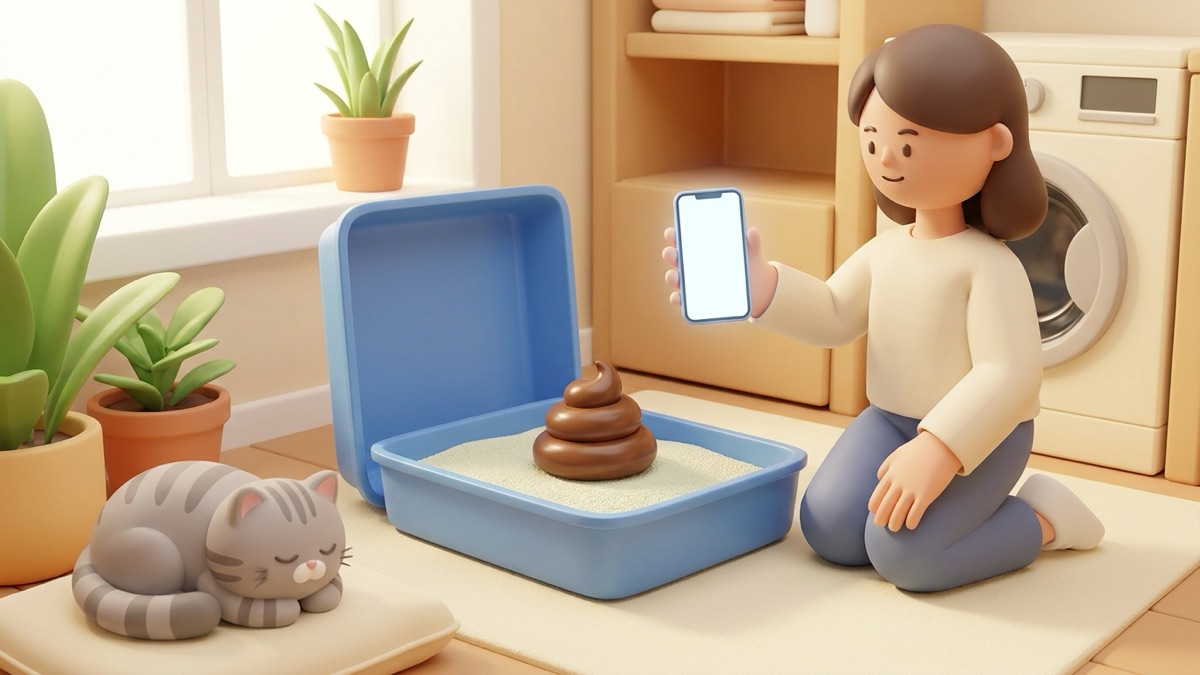
- Look at the poop before you clean it. Hard pellets, soft piles, blood, mucus, worms? Take a photo and note the time and place.
- Watch your cat at the box. Straining, crying, in and out, nothing coming out? Vet call now, especially in a male.
- Check the basics. Eating? Vomiting? Moving stiffly? Hiding more than usual?
- Scoop every box now, and add a second box in a new spot if you only have one.
- Clean the accident spot with an enzyme-based cleaner, not an ammonia-based one.
- Book the vet if this is new, even if your cat seems fine. Bring the photo and, if you can, a fresh sample in a sealed container.
- Do not punish, and change one thing at a time so you can tell what helped.
The cat poop color chart and the stool score checker help you describe what you found when you call. More lives on our litter box problems hub.
When to call the vet
Call a vet now
- A cat, especially a male, straining in or near the litter box with little or nothing coming out.
- Black, sticky, tar-like poop.
- A lot of fresh blood, or diarrhea that is mostly blood.
- Repeated vomiting with belly pain, or vomiting with no poop coming out.
- A kitten with diarrhea plus vomiting, low energy, or no interest in food.
- Pale or white gums, collapse, or not able to stand.
- String, thread, yarn, or tinsel hanging from the mouth or bottom. Do not pull it.
Call your vet today
- A cat suddenly peeing or pooping outside the litter box, even one who seems well.
- No poop for 2 to 3 days, or repeated straining that only produces small, hard pieces.
- Diarrhea lasting more than 24 to 48 hours in a cat, or any diarrhea in a kitten.
- A small streak of fresh blood, or mucus with straining, in a cat who is otherwise well.
- Crying, scooting, licking under the tail, or any sign that pooping hurts.
- An older cat who has stopped jumping or climbing, or who moves stiffly.
A cat pooping outside the box is not a bad cat, and you are not a bad owner. It is a message, and most of the time it reads: something hurts, something is wrong with the box, or something in my world changed. Take the medical step first, make the box an easy yes, then give her time. The PoopScout app reads a photo of the poop for score, color and findings and gives you one of these four verdicts, so the first part of the puzzle is sorted before you ring the vet.
PoopScout guides are general information for pet owners, written from veterinary sources named above. They are not veterinary advice, they do not diagnose, and they can be wrong for your pet. If your dog or cat seems unwell, or you are worried, call your vet. In an emergency, contact your vet or the nearest emergency animal hospital right away.
Questions owners ask
Why is my cat suddenly pooping outside the litter box?
A sudden change usually has a reason: constipation, diarrhea, joint pain, urinary trouble, a dirty or cramped box, or a stress that arrived around the same time. Vets ask you to rule out a medical cause first, because sick cats often do not look sick.
Why does my cat poop right next to the litter box?
Pooping beside the box usually means your cat wants to use it and cannot quite bring itself to. The box may be too small, too dirty, too high-sided for sore joints, or linked to a painful poop. Fix the box first and have the vet check for pain.
Is my cat pooping on the floor out of spite?
No. Cats do not poop out of revenge. They poop where it feels safe and comfortable, and when that is no longer the box, something about the box, their body or their world has changed. Punishment adds stress and tends to make it worse.
How many litter boxes should I have?
One per cat, plus one, in separate spots. Even a single cat does better with two. Scoop every box at least once a day, and keep the litter unscented and a couple of inches deep.
When is pooping outside the litter box an emergency?
If your cat, especially a male, is straining in or near the box and little or nothing is coming out, call a vet now. That can be a urinary blockage, which is deadly within a day or two. Black tarry poop, a lot of blood, or vomiting with weakness also mean call a vet now.
Sources
- Cornell Feline Health Center: Feline Behavior Problems: House Soiling: vet.cornell.edu/departments-centers-and-institutes/cornell-feline-health-center/
- Cornell Feline Health Center: The Special Needs of the Senior Cat: www.vet.cornell.edu/departments-centers-and-institutes/cornell-feline-health-cen
- Cornell Feline Health Center: Feline Lower Urinary Tract Disease: vet.cornell.edu/departments-centers-and-institutes/cornell-feline-health-center/
- Cornell Feline Health Center: Constipation: vet.cornell.edu/departments-centers-and-institutes/cornell-feline-health-center/
- Cornell Feline Health Center: Diarrhea: vet.cornell.edu/departments-centers-and-institutes/cornell-feline-health-center/
- AAFP and ISFM Guidelines for Diagnosing and Solving House-Soiling Behavior in Cats (Journal of Feline Medicine and Surgery, 2014): pmc.ncbi.nlm.nih.gov/articles/PMC11148882/
- VCA Animal Hospitals: Constipation in Cats: vcahospitals.com/know-your-pet/constipation-in-cats
- VCA Animal Hospitals: Diarrhea in Cats: vcahospitals.com/know-your-pet/diarrhea-in-cats
- VCA Animal Hospitals: Anal Sac Disease in Cats: vcahospitals.com/know-your-pet/anal-sac-disease-in-cats
- VCA Animal Hospitals: Tritrichomonas in Cats: vcahospitals.com/know-your-pet/tritrichomonas-in-cats
- Merck Veterinary Manual (Cat Owners): Introduction to Digestive Disorders of Cats: www.merckvetmanual.com/cat-owners/digestive-disorders-of-cats/introduction-to-di
Read next
Cat diarrhea
Cat Diarrhea: Causes and What to Do
Blood in poop
Blood in Cat Poop: What It Means and When to Worry

Mucus, texture & shape
Mucus in Dog Poop: Causes and When to Worry

Blood in poop
Why Is My Dog Pooping Blood?

Eating, rolling, burying
Why Do Dogs Eat Poop? (And How to Stop It)
Dog diarrhea
Dog Diarrhea: Causes, What to Do, When to Worry