
Cat Diarrhea: Causes and What to Do
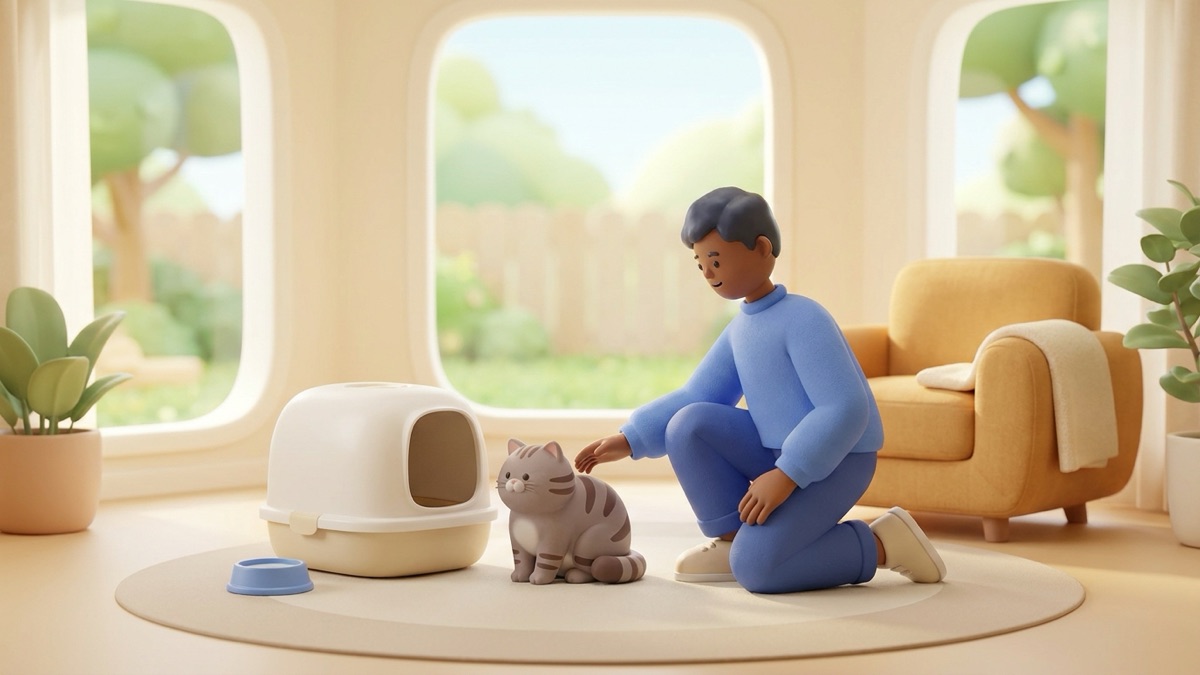
You scooped the box and found a puddle instead of a log. Your cat is sitting there looking perfectly normal, and you are wondering whether this is a wait-and-see or a tonight problem. Most of the time it is a wait. Here is how to tell.
Quick answer
Cat diarrhea is most often a short upset from a food change, a stolen snack, stress or parasites, and in a bright adult cat it usually settles within a day or two. Diarrhea past 24 to 48 hours, or with vomiting, blood, no appetite or low energy, needs a vet. Kittens and older cats get a faster call.
Scout's read
One bout of loose poop in an adult cat who is eating, drinking and acting normal is a watch for 24 to 48 hours with fresh water out. Diarrhea past 24 to 48 hours, a cat who has refused food for more than a day, blood, or vomiting is Call your vet today. A kitten with diarrhea plus vomiting, or any cat who is weak or has pale gums, is Call a vet now.
Key takeaways
- Most cat diarrhea is an irritated gut: a sudden food change, something eaten off the floor, stress, or parasites.
- The thresholds are shorter for cats than dogs: more than 24 to 48 hours of diarrhea, or a cat off food for more than a day, is a same-day call.
- Never give a cat human medicine, and do not fast a cat on your own. Both can go badly in cats.
- Kittens with diarrhea and vomiting are Call a vet now. Panleukopenia and dehydration are the reason.
- A fresh sample and a fecal test find most of the causes you cannot see.
What counts as diarrhea in cats?
Diarrhea is poop that is looser, more frequent or larger in volume than your cat's normal. Vets score consistency on a 1 to 7 scale, where 2 is ideal: firm, segmented, easy to scoop. Most cats poop about once a day, so two watery puddles in a morning is a bigger change than one soft log.
| Score | What you see in the box | What to do |
|---|---|---|
| 3 | A moist log that holds together when scooped | Nothing, unless it is softer than usual for your cat |
| 4 to 5 | Soggy log or soft piles that leave residue and lose shape | Keep an eye on it for 24 to 48 hours, fresh water out |
| 6 | No shape, piles or spots | Watch a bright adult cat for a day; call your vet if it carries on or comes with vomiting, blood or no appetite |
| 7 | Watery puddle, no texture | Call your vet today; call a vet now if it keeps coming, has blood, or your cat is a kitten, weak or vomiting |
Try it
Not sure whether you are looking at a 4 or a 6? The stool score checker walks you through the 1 to 7 scale with pictures and tells you which side of the "wait or call" line you are on.
Why does my cat have diarrhea? The common causes
The first job is sorting the quick, harmless causes from the ones that need a vet. Vets group them roughly like this.
| Cause | Typical clues | Usual next step |
|---|---|---|
| Sudden food change | Started within a day or two of a new food, cat otherwise well | Go back to the old food, change over slowly |
| Something they ate | Table food, a plant, a bug, a hunted mouse | Watch 24 to 48 hours; poison control if a toxic plant is possible |
| Parasites | Kittens, outdoor cats, shelter or multi-cat homes; diarrhea that comes and goes | Vet visit with a fresh sample |
| Stress | A move, a new pet, a boarding stay, a car trip | Usually brief; settle the routine |
| Infection | Vomiting too, low energy, fever, especially in kittens | Vet today; vet now for a kitten |
| Disease outside the gut | Older cat, weight loss, thirst, chronic diarrhea | Vet visit with bloodwork |
Food and things they should not have eaten
An abrupt change in diet is the classic trigger. Cornell notes that it can cause diarrhea for a few days on its own, which is why vets ask you to switch foods gradually over a week or more. Table scraps, rich treats, raiding the dog's bowl and licking something off the floor all count too, and a cat who hunts can pick up an upset from the mouse or the parasites that came with it.
Parasites
Parasites are the big one in kittens, outdoor cats and cats from shelters or multi-cat homes. Roundworms and hookworms can cause diarrhea, and kittens pick roundworms up through their mother's milk. Giardia is a microscopic parasite behind diarrhea that comes and goes; Cornell reports it is more common in cats under a year old and in multi-cat households. Coccidia mainly affects kittens, often with mucus in the poop. Tritrichomonas is less familiar: long-running, smelly, cow-pat diarrhea with mucus or blood in young cats, often from catteries, who otherwise stay bright and playful. Routine fecal tests miss it, so your vet may need a special test. Worms you can see in cat poop are a small part of this list, which is why a fecal test matters.
Infections
The one every cat owner should know is feline panleukopenia (feline distemper), a serious virus that causes vomiting and diarrhea, hits kittens hardest, and is the reason kitten vaccines run in a series until about 16 to 20 weeks of age. A kitten, or an unvaccinated cat, with diarrhea plus vomiting or low energy is a vet-now situation.
Diseases outside the gut
Diarrhea that drags on, especially in a middle-aged or older cat, can be a sign of something elsewhere in the body. Cornell lists an overactive thyroid, kidney or liver disease, inflammatory bowel disease (IBD), and lymphoma among the causes of persistent diarrhea. Hyperthyroidism is common in older cats and shows up as weight loss despite a big appetite, thirst, vomiting and diarrhea. IBD causes chronic vomiting, diarrhea and weight loss, and is often managed with a vet-guided diet trial. None of this is worked out at home, so a cat with diarrhea that keeps coming back deserves a proper workup.
Why do cats get diarrhea when nothing has changed?
No obvious culprit is the version that worries people most. A few quiet causes explain most of it.
- Something you did not see. A hunted mouse, a houseplant leaf, a lick of something spilled.
- A parasite that was already there. Giardia and Tritrichomonas can sit quietly and flare.
- Stress you did not clock. A neighbor's cat at the window, a change in your schedule, new furniture. Cats notice.
- A chronic condition starting up. In an older cat, "random" diarrhea that keeps returning is often the first visible sign of thyroid, kidney or bowel disease.
- Medicines. Some drugs loosen poop. If your cat started something new, tell your vet.
Cat has diarrhea but seems fine: wait or call?
If your adult cat has had one or two loose poops, is eating, drinking and their normal self, and there is no blood or vomiting, keep an eye on it for 24 to 48 hours. Keep fresh water available, hold off on new foods and treats, and scoop the box so you can see every poop. Many of these settle on their own.
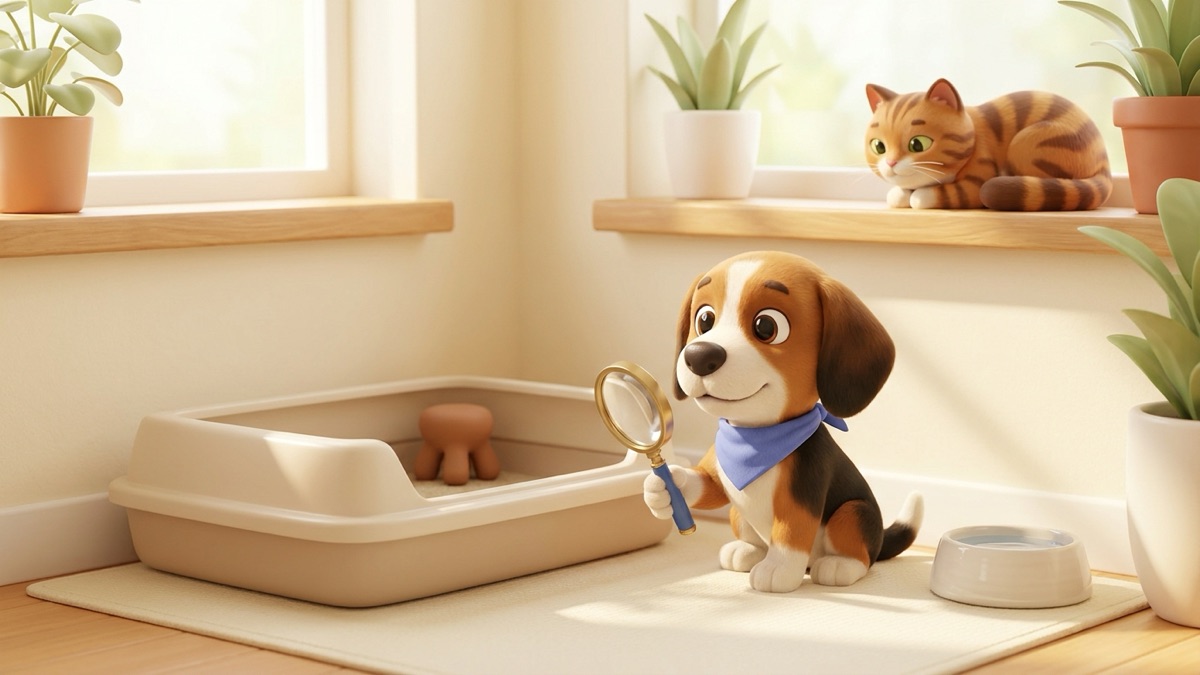
The watch ends early if anything else shows up: vomiting, a refused meal, blood, a cat who hides or stops grooming, or straining in the box. It ends on schedule if the diarrhea is still there after 24 to 48 hours: Cornell says diarrhea past a day or two with poor appetite, lethargy or vomiting needs a vet as soon as possible, and VCA says more than two days is a call either way. For the gray areas, read cat diarrhea but acting normal.
What cat diarrhea looks like: colors and clues
The look of the poop points your vet in a direction, starting with where in the gut it is coming from.
| Clue | What it can mean | How fast to act |
|---|---|---|
| Small, frequent, urgent poops with mucus or red streaks | Large intestine (colon) irritation: stress, parasites, colitis | Keep an eye for a day; call your vet today if it continues or there is more than a streak of blood |
| Large, watery volumes, sometimes with weight loss | Small intestine: infection, malabsorption, food issues | Call your vet today; now if your cat is weak or vomiting |
| Gray or yellow, foul smelling | Common diarrhea colors; pale and greasy can mean fat is not being digested | Call your vet today if it repeats |
| Black and tarry | Digested blood from higher up; hookworms can cause it in cats | Call a vet now |
| Mostly blood, or raspberry-jam | Serious gut bleeding | Call a vet now |
A small streak of red blood on soft poop usually comes from an irritated colon and is a same-day call, not an emergency, in a cat who is otherwise well. Blood in cat poop and mucus in cat poop have their own guides, and the cat poop color chart covers the rest of the palette.
Diarrhea in cats vs dogs: the cat-only rules
A lot of diarrhea advice online is written for dogs. Cats differ in ways that matter.
- Never give a cat human medicine. Cornell is blunt that some over-the-counter medicines can harm cats, including common remedies for upset stomachs and pain. Ask your vet before giving a cat anything, including products made for dogs.
- Do not fast a cat on your own. Withholding food is common dog advice. Cats who stop eating, especially overweight cats, can develop hepatic lipidosis, a serious liver condition that Cornell says almost always follows a period of not eating. VCA says your vet may advise a short food break or small meals of a gut-friendly diet, and the word that matters is vet.
- A cat refusing food for more than a day is Call your vet today. Even if the diarrhea itself looks mild.
- A cat straining in the box may not be constipated. A cat, especially a male, who strains and passes little or nothing may have a urinary blockage, which can kill within a day or two. If you cannot tell whether it is poop or pee, that is Call a vet now.
- Kittens dehydrate fast. VCA notes that vomiting and diarrhea set kittens up for dehydration quickly. Kitten diarrhea always gets a same-day call at least.
Heads up
If there is any chance your cat ate rat or mouse bait, a lily or another toxic plant, or any other poison, call your vet or ASPCA Animal Poison Control at (888) 426-4435 (a fee may apply), even if they seem fine.
What to feed a cat with diarrhea
Fresh water first: Merck warns that ongoing diarrhea can lead to dehydration and salt imbalances serious enough to cause shock. Then food, kept simple.
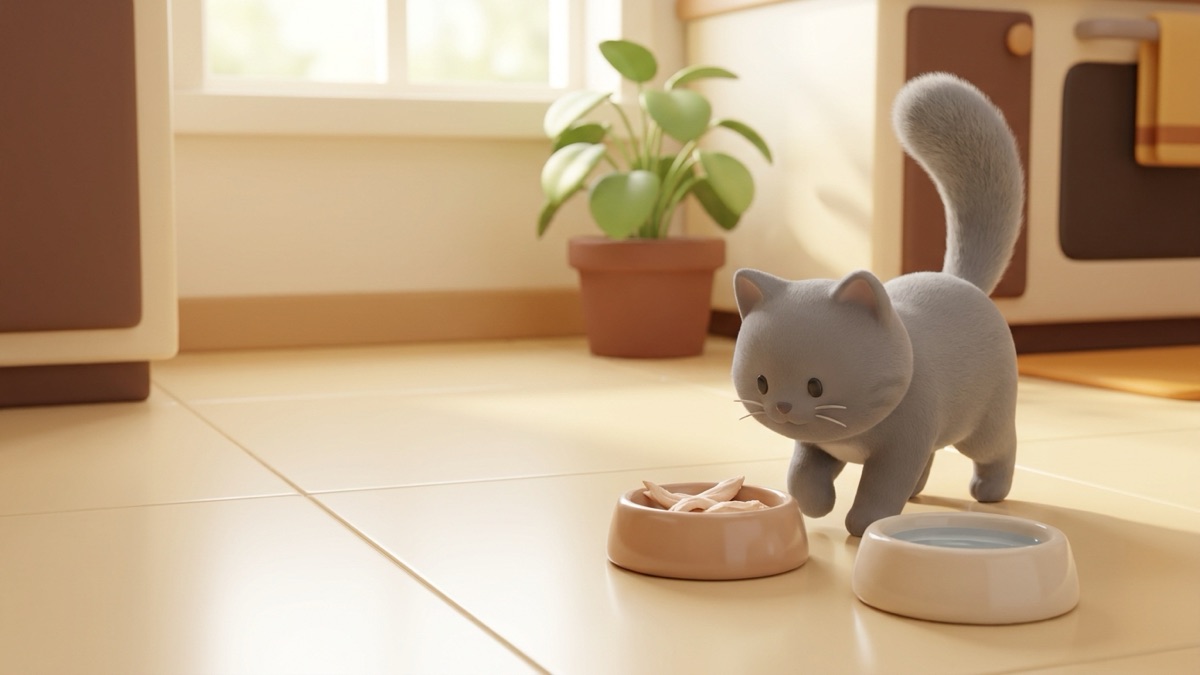
- Do not change food suddenly. If a new food started this, go back to the old one and transition again later, slowly.
- Small, frequent meals. Several small portions are easier on an irritated gut than one big one.
- A bland diet only if your vet suggests it. Plain cooked chicken with no skin, bones or seasoning, or a veterinary diet made for gut upsets, are the usual choices. It is a short bridge, not a new diet, so ask your vet how long.
- No treats or table food. Keep the menu boring until poop is back to normal.
- Go back gradually. VCA suggests returning to the regular diet over 7 to 10 days once poop is normal.
- Ask before adding fiber or probiotics. Your vet knows whether they suit your cat.
What to feed a cat with diarrhea goes through the options meal by meal.
What to do today
- Photograph the poop in good light before you scoop, and note the time and the score.
- Write down anything new: food, treats, a plant, a trip, a new pet, a medicine.
- Check your cat, not just the box: eating, drinking, grooming, energy, hiding, vomiting. Check the gums: light rosy pink is normal, pale or white is Call a vet now.
- Put fresh water out in more than one place, and scoop the box every time so you can see what comes next.
- Bag a fresh sample and keep it sealed in the fridge, away from food, in case the vet wants it today.
- Do not give human medicines, dog medicines or home remedies unless your vet says so, and do not fast your cat.
When to call the vet
Call a vet now
- A kitten with diarrhea plus vomiting, low energy, or no interest in food.
- Black, sticky, tar-like poop.
- A lot of fresh blood, or diarrhea that is mostly blood or looks like raspberry jam.
- A cat, especially a male, straining in the litter box with little or nothing coming out.
- Pale or white gums, collapse, or severe weakness.
- Repeated vomiting with belly pain.
- Any chance of rat or mouse bait or another poison, even if your cat seems fine.
- String, thread, yarn, or tinsel hanging from the mouth or bottom. Do not pull it.
Call your vet today
- Diarrhea lasting more than 24 to 48 hours.
- Diarrhea with a poor appetite or a vomit or two, in an adult cat who is still alert.
- Any diarrhea in a kitten, even a bright and playful one.
- A cat who has refused food for more than a day.
- A small streak of fresh blood, or mucus with straining, in a cat who is otherwise well.
- Worms, or rice-like bits, in the poop or on the fur around the bottom.
- Gray, greasy, or pale and bulky poop.
- Diarrhea that keeps coming back, several stool changes in 24 hours, or loose poop with weight loss or thirst in an older cat.
- A cat suddenly pooping or peeing outside the litter box.
Cat diarrhea is usually a short story: a food slip or a stressful day, 24 to 48 hours of watching, and a normal log. The job is to notice when it is not that story, and cats make that harder by hiding how they feel. Watch the box and the cat, keep the cat-only rules in mind, and bring a fresh sample when you go in. The rest of the cat diarrhea guides cover specific situations in more depth. The PoopScout app reads a photo of your cat's poop for score, color and findings and gives you one of these four verdicts.
PoopScout guides are general information for pet owners, written from veterinary sources named above. They are not veterinary advice, they do not diagnose, and they can be wrong for your pet. If your dog or cat seems unwell, or you are worried, call your vet. In an emergency, contact your vet or the nearest emergency animal hospital right away.
Questions owners ask
How long can a cat have diarrhea before I should worry?
In an adult cat who is eating, drinking and acting normally, a day of loose poop is usually a watch. Diarrhea that lasts more than 24 to 48 hours, or comes with vomiting, blood, a poor appetite or low energy, is a call to your vet. Kittens get a faster call.
Can I give my cat human diarrhea medicine?
No. Some over-the-counter human medicines are harmful to cats, including common upset-stomach and pain remedies. Ask your vet before giving a cat anything, including supplements and remedies made for dogs.
What can I feed a cat with diarrhea?
Keep fresh water available and feed small, frequent meals of their usual food or a bland food your vet suggests, such as plain cooked chicken or a veterinary gut diet. Do not fast a cat on your own, and move back to the regular food gradually over 7 to 10 days once poop firms up.
Why does my cat have diarrhea but seems fine?
A food change, a stolen snack, a stressful day or a mild parasite load can all loosen poop in a cat who otherwise feels well. Give it 24 to 48 hours. If it carries on, or keeps coming back, book a vet visit and bring a fresh sample for a fecal test.
Is diarrhea in kittens an emergency?
It can be. Kittens dehydrate fast and are the main victims of panleukopenia. A kitten with diarrhea plus vomiting, low energy or no interest in food needs a vet now. A bright, playful kitten with soft poop still needs a call to the vet today and a fecal test.
Sources
- Cornell Feline Health Center: Diarrhea: vet.cornell.edu/departments-centers-and-institutes/cornell-feline-health-center/
- VCA Animal Hospitals: Diarrhea in Cats: vcahospitals.com/know-your-pet/diarrhea-in-cats
- Merck Veterinary Manual (Cat Owners): Introduction to Digestive Disorders of Cats: www.merckvetmanual.com/cat-owners/digestive-disorders-of-cats/introduction-to-di
- Merck Veterinary Manual (Cat Owners): Disorders of the Stomach and Intestines in Cats: www.merckvetmanual.com/cat-owners/digestive-disorders-of-cats/disorders-of-the-s
- Cornell Feline Health Center: Gastrointestinal Parasites of Cats: www.vet.cornell.edu/departments-centers-and-institutes/cornell-feline-health-cen
- Companion Animal Parasite Council: Cystoisospora (Coccidia): capcvet.org/guidelines/cystoisospora/
- Companion Animal Parasite Council: Trichomoniasis (Tritrichomonas): capcvet.org/guidelines/trichomoniasis/
- Cornell Feline Health Center: Feline Panleukopenia Virus: www.vet.cornell.edu/departments-centers-and-institutes/cornell-feline-health-cen
- Cornell Feline Health Center: Hyperthyroidism in Cats: www.vet.cornell.edu/departments-centers-and-institutes/cornell-feline-health-cen
- Cornell Feline Health Center: Inflammatory Bowel Disease: www.vet.cornell.edu/departments-centers-and-institutes/cornell-feline-health-cen
- Cornell Feline Health Center: Hepatic Lipidosis: www.vet.cornell.edu/departments-centers-and-institutes/cornell-feline-health-cen
- Cornell Feline Health Center: Feline Lower Urinary Tract Disease: vet.cornell.edu/departments-centers-and-institutes/cornell-feline-health-center/
- VCA Animal Hospitals: How to Keep Your Kitten Hydrated: vcahospitals.com/pediatric/kitten/health-wellness/how-to-keep-your-kitten-hydrat
- Nestle Purina Fecal Scoring System (hosted by University of Missouri Veterinary Health Center): vhc.missouri.edu/wp-content/uploads/2020/07/Nestle-Purina-Fecal-Scoring-System.p
Read next
Litter box problems
Why Is My Cat Pooping Outside the Litter Box?
Dog diarrhea
Dog Diarrhea: Causes, What to Do, When to Worry

Mucus, texture & shape
Mucus in Dog Poop: Causes and When to Worry
Eating, rolling, burying
Why Do Dogs Eat Poop? (And How to Stop It)
Blood in poop
Blood in Cat Poop: What It Means and When to Worry
Worms & parasites
Worms in Dog Poop: What They Look Like