
Orange Dog Poop: Causes and What to Do
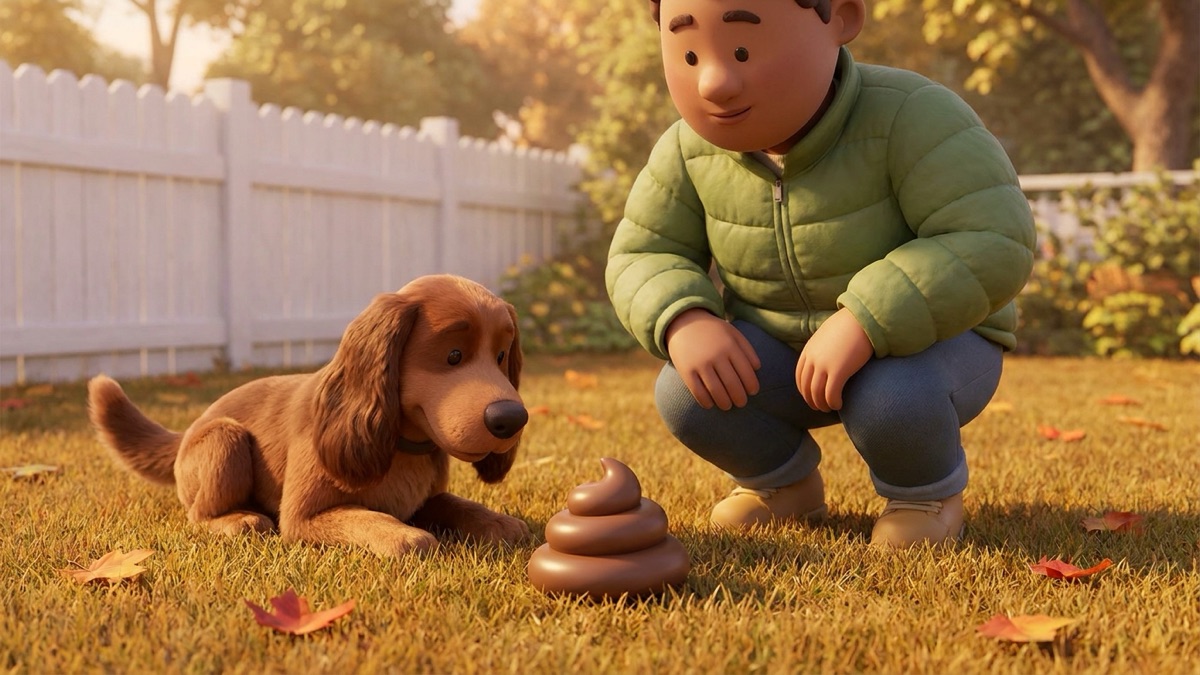
You went to bag it and stopped. The poop is orange: a rusty log, or a soft orange pile where a brown one should be. Your dog may be acting completely normal. Here is what orange can mean, how to rule out the one thing that matters most, and what to do next.
Quick answer
Orange dog poop often means food moved through the gut too fast for bile to turn it brown, or the color of something your dog ate is passing through. It is sometimes linked to the liver, gallbladder or bile. One orange poop in a bright dog is a watch. Orange that continues needs your vet.
Scout's read
One orange poop in a dog who is eating, drinking and acting normally is a watch for the next day or two. Orange that continues, or comes with diarrhea, vomiting or a poor appetite, is Call your vet today. Orange poop with pale gums, a weak dog, or a lot of red that could be blood is Call a vet now.
Key takeaways
- Orange sits between brown and yellow. It often means the poop left the gut before bile finished turning it brown.
- Sometimes orange is simply the color of something your dog ate. If so, it clears within a day or two.
- Make sure orange is not red. A red or pink smear on a white paper towel is blood, and blood has faster rules.
- Orange poop after chicken and rice most likely reflects the upset gut, not the meal. It should improve within 2 to 3 days.
- Check the gums. Pale, white or yellow gums with orange poop mean call a vet, whatever else is going on.
Why is my dog's poop orange?
Healthy poop is brown because of bile. The liver makes bile to help digest fat, and bile carries a yellow pigment. On the way through the gut, bacteria turn that pigment into the ones that color a normal poop, and those range from yellow and orange to brown.
That gives three explanations for an orange poop.
The gut moved too fast. When food rushes through, the pigment does not finish changing, and vets note that stool passing through too quickly is often loose as well. A food that did not agree with your dog, a sudden switch, table scraps or a raid on the trash are the usual triggers.
Something orange went in. Sometimes a strange color simply matches something your dog ate, passing through. So ask the obvious question: did your dog eat a lot of anything orange in the last day or two? A new food or treat, orange vegetables, a dyed chew, a crayon.
The liver, the bile system or the blood. Vets list orange or yellow poop as a possible sign of a liver or biliary (bile system) problem. It is not the first thing to assume from one orange poop, but it is why orange that keeps coming should not be ignored.
| What you see | What it can mean | Verdict |
|---|---|---|
| One orange poop, formed or a little soft, dog acting normal | A fast gut or something orange passing through | Keep an eye |
| Orange poop for more than a day or two | An upset that is not settling, or a liver or bile clue | Call your vet today |
| Orange diarrhea with vomiting, a poor appetite or low energy | The whole gut is involved | Call your vet today, now for a puppy or a weak dog |
| Orange poop with pale or white gums, or yellow gums in a dog who seems sick | Blood or liver trouble | Call a vet now |
| Orange-red or rust, smears red on a paper towel | Blood | Call your vet today for a streak, now for a lot |
Try it
Is it orange, yellow, tan or red? The dog poop color chart puts the colors side by side with what each can mean and how fast to act.
Orange or red? Rule out blood first
Orange and red can look alike on grass or in poor light, and the rules for blood are faster, so check this first.
Pick up a little of the poop with a white paper towel or tissue and smear it in daylight. An orange or orange-brown smear is orange poop. A red or pink smear is blood. If the smear is black and sticky, that is digested blood, which is a different color with its own urgent rules, covered in black dog poop.
If it is blood, switch guides. A small streak in a dog who is bright and eating is Call your vet today. A lot of blood, jam-like diarrhea, or blood with vomiting or weakness is Call a vet now. Our guide to red dog poop covers the difference.
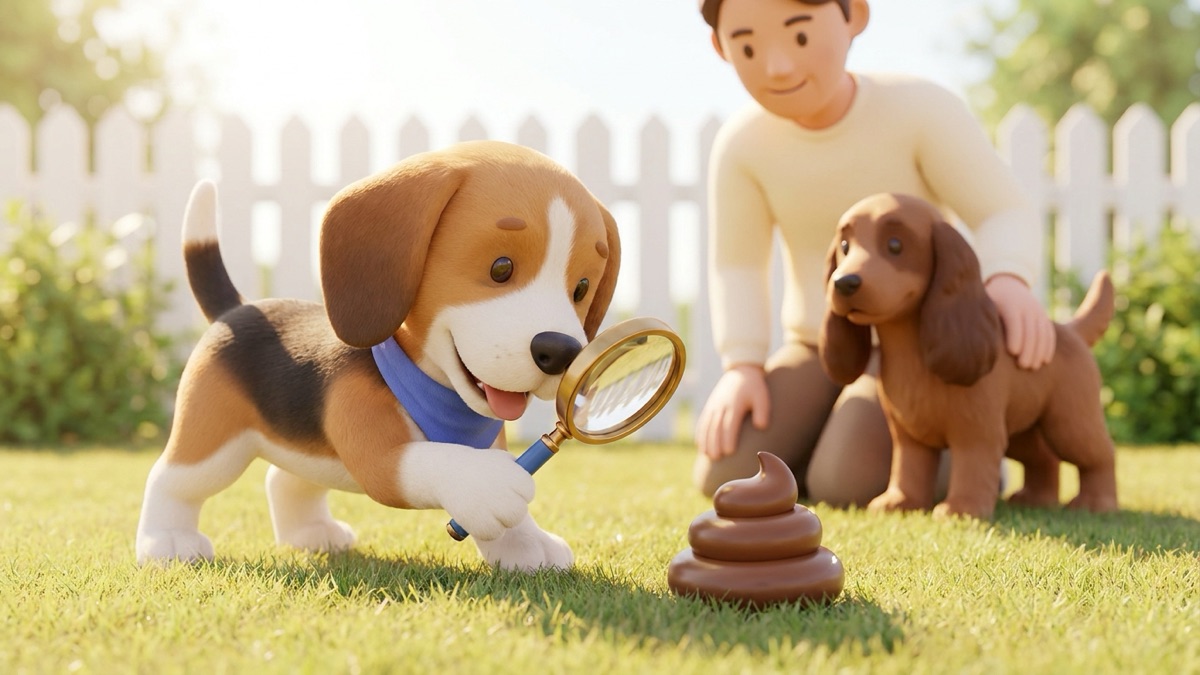
Orange poop in a dog after chicken and rice
This one worries people because the bland diet was supposed to fix things.
The vet references behind this guide do not list plain chicken and rice as a cause of orange poop on its own. What they do describe fits the timing: a dog is put on a bland diet because the gut is already upset, and an upset gut moves fast. While it is still moving fast, the poop comes out under-colored, somewhere in the yellow to orange range, and often soft. In other words, the orange is most likely the tail end of the upset, not something the chicken and rice did.
If things are going well, the poop firms up, the color drifts back toward brown, and your dog stays bright, eating and drinking.
Call your vet today if the poop has not improved after 2 to 3 days on the bland diet, if it is getting looser, or if your dog is vomiting or losing interest in food. A bland diet is a short bridge, not a long-term food, so ask your vet when and how to move back to the regular diet. Going back a little at a time over about a week is the usual approach. Our guide on what to feed a dog with diarrhea walks through the steps.
Tip
Ask your vet before starting a bland diet or fasting your dog, especially for a puppy, a senior, or a dog with another health condition.
Orange diarrhea in a dog
Orange diarrhea is the fast-gut explanation at full speed: the poop is loose or watery, and it never had time to turn brown. The diarrhea rules decide what happens next.
- One loose orange poop in a bright adult dog who is eating: Keep an eye for 24 to 48 hours, and keep water out.
- Diarrhea that lasts more than 2 days, or comes with a poor appetite or a vomit or two: Call your vet today.
- Any diarrhea in a puppy, even a bright and playful one: Call your vet today.
- A puppy, or a dog who is not fully vaccinated, with vomiting plus diarrhea: Call a vet now. Parvovirus is the reason.
The causes are the same as for any sudden diarrhea: a diet slip, a sudden food change, infection and parasites. Our dog diarrhea guide covers them.
When orange points to the liver, bile or blood
One orange poop in a well dog is a watch. Orange that keeps coming, in a dog who has not eaten anything unusual, deserves a closer look, because the pigment that colors poop starts in the blood and passes through the liver.
Two checks at home tell you a lot. Lift your dog's upper lip in good daylight and look at the gums, then look at the whites of the eyes.
- Yellow gums or eyes. A yellow tinge is called jaundice. It means bile pigment is building up in the body, which vets see with liver disease, a blocked bile duct, or red blood cells breaking down.
- Pale or white gums. Healthy gums are a light rosy pink. Pale gums can mean anemia or shock. When red blood cells are being destroyed faster than normal, extra pigment reaches the gut, and vets note the poop can turn orange.
Other signs vets look for with liver disease are a poor appetite, vomiting, diarrhea, weight loss, and drinking and peeing more than usual.
Heads up
Pale or white gums are Call a vet now, with or without orange poop. Yellow gums or eyes in a dog who is also weak, vomiting or off food are Call a vet now too. If there is any chance your dog ate rat or mouse bait or another poison, call your vet or ASPCA Animal Poison Control at (888) 426-4435 (a fee may apply), even if they seem fine.
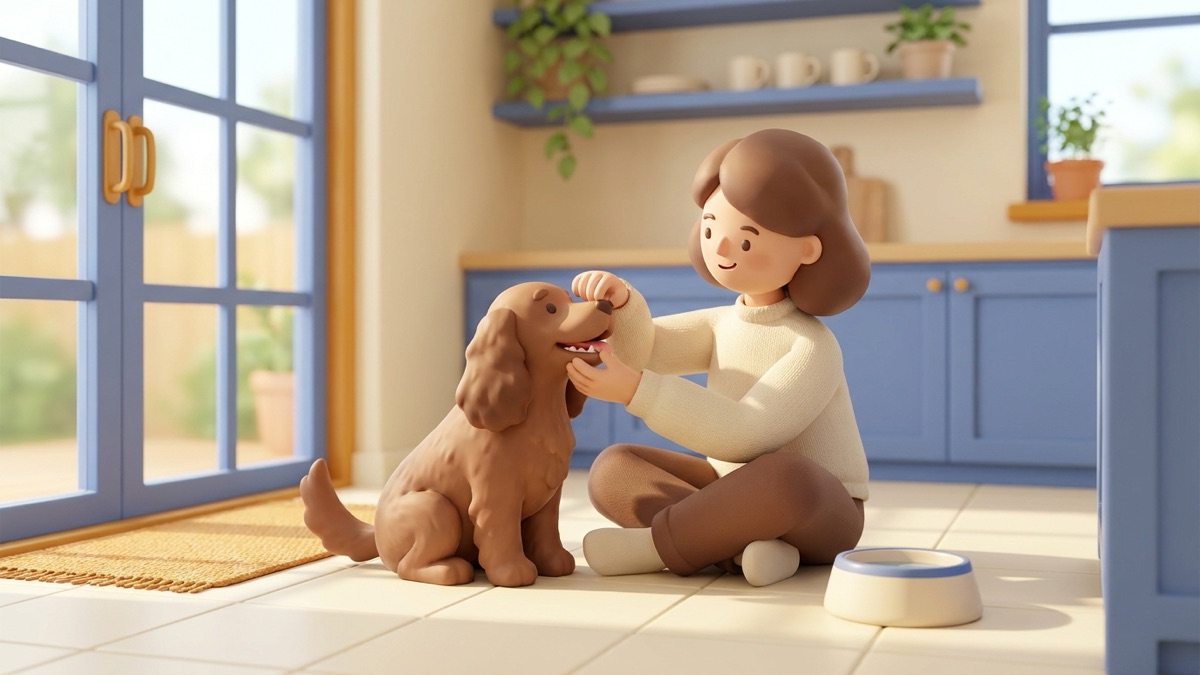
Orange dog poop but acting normal
If your dog is bright, hungry and drinking, the smear test showed no red, and the gums are pink, you are in watch territory. Keep the food the same, skip the extras, and look at the next few poops over 24 to 48 hours. Orange that is still there after that, or that keeps coming back, is a call to your vet with a photo and a fresh sample.
Yellow follows the same pattern, covered in yellow dog poop, and green has its own causes, covered in green dog poop. For every color in one place, see the dog poop colors hub.
Good to know
A photo and a description cannot show everything. The liver is checked with blood tests, and many parasites only show up on a vet's fecal test. If orange keeps coming back, those tests answer what a photo cannot.
What to do today
- Take a photo in daylight before you clean up.
- Do the smear test on a white paper towel. Red or pink means blood. Black and sticky means call a vet now.
- Check the gums and the whites of the eyes. Pink is normal. Pale, white or yellow means call a vet.
- Note the consistency (formed, soft, no shape, or watery), the time, and how many times your dog has gone today.
- Think back over the last two days: a new food or treat, anything orange, table scraps, the trash.
- Keep fresh water out all day. Keep the food the same, and ask your vet before fasting your dog or starting a bland diet.
- Bag a fresh sample if you might see the vet: a piece about an inch long in a clean sealed bag or pot, kept in the fridge away from food for up to 24 hours.
- Do not give human medicines unless your vet says so. Some can be harmful.
When to call the vet
Call a vet now
- Pale or white gums.
- Yellow gums, eyes or skin in a dog who is also vomiting, weak or not eating.
- A lot of fresh blood, diarrhea that is mostly blood, or black, sticky, tar-like poop.
- A puppy with diarrhea plus vomiting, low energy, or no interest in food.
- A dog who is not fully vaccinated, at any age, with vomiting and diarrhea.
- Repeated vomiting with belly pain.
- Collapse, severe weakness, or not able to stand.
- Any chance your dog ate rat or mouse bait or another poison, even if they seem fine.
Call your vet today
- Orange poop that continues for more than a day or two, or keeps coming back.
- Orange diarrhea lasting more than 2 days, or diarrhea with a poor appetite or a vomit or two in an adult dog who is still alert.
- Poop that has not improved after 2 to 3 days on a bland diet.
- Any diarrhea in a puppy, even a bright and playful one.
- A small streak of fresh blood in a dog who is otherwise well.
- A yellow tinge to the gums or eyes in a dog who otherwise seems well.
- Any color you cannot explain.
One orange poop in a happy dog with pink gums is most likely a gut in a hurry or yesterday's snack on its way out. Orange that stays, turns to diarrhea, or comes with pale or yellow gums is the kind to hand to your vet. The PoopScout app reads a photo for score, color and findings and gives you one of the same four verdicts you have read here.
PoopScout guides are general information for pet owners, written from veterinary sources named above. They are not veterinary advice, they do not diagnose, and they can be wrong for your pet. If your dog or cat seems unwell, or you are worried, call your vet. In an emergency, contact your vet or the nearest emergency animal hospital right away.
Questions owners ask
Why is my dog's poop orange?
Common reasons are food moving through the gut too fast for bile to finish turning it brown, or the color of something your dog ate passing through. Orange poop is sometimes linked to the liver, the gallbladder or bile, which is why orange that keeps coming needs a vet.
Is orange dog poop an emergency?
Usually not. One orange poop in a dog who is bright and eating is a watch for a day or two. Call your vet today if it continues or comes with diarrhea, vomiting or a poor appetite. Call a vet now if the gums are pale, your dog is weak, or there is a lot of blood.
Why is my dog's poop orange after chicken and rice?
The likeliest reason is the upset gut that put your dog on chicken and rice in the first place. While the gut is still moving fast, poop comes out under-colored, in the yellow to orange range. It should firm up and turn brown as your dog recovers. If it has not improved after 2 to 3 days on the bland diet, call your vet.
What does orange diarrhea in a dog mean?
Orange diarrhea means the gut is moving fast, so the poop is loose and never finished turning brown. A diet slip, a sudden food change, infection and parasites are common reasons. Call your vet if it lasts more than 2 days, sooner with vomiting, blood, a poor appetite or low energy, and now for a puppy who is also vomiting.
Can food turn dog poop orange?
It can. Sometimes a strange color simply matches something your dog ate, passing through. If your dog had a lot of something orange and is otherwise well, watch the next few poops. The color should be back to brown within a day or two once that food is out of the picture.
Sources
- American Kennel Club: What Your Dog's Poop Says About Their Health: www.akc.org/expert-advice/health/dogs-poop-says-health/
- VCA Animal Hospitals: Puppy Poop Colors: vcahospitals.com/pediatric/puppy/health-wellness/puppy-poop-colors-and-eco-frien
- Merck Veterinary Manual (Professional): Bilirubin Synthesis and Metabolism in Animals: www.merckvetmanual.com/digestive-system/liver-structure-and-function/bilirubin-s
- Cornell University eClinPath: Outline of normal bilirubin metabolism: eclinpath.com/chemistry/liver/cholestasis/bilirubin/bilirubin-metabolism-2/
- Merck Veterinary Manual (Dog Owners): Disorders of the Liver and Gallbladder in Dogs: www.merckvetmanual.com/dog-owners/digestive-disorders-of-dogs/disorders-of-the-l
- VCA Animal Hospitals: Testing for Jaundice: vcahospitals.com/know-your-pet/testing-for-jaundice
- VCA Animal Hospitals: Testing for Pallor: vcahospitals.com/know-your-pet/testing-for-pallor
- Cornell Riney Canine Health Center: Diarrhea: www.vet.cornell.edu/departments-centers-and-institutes/riney-canine-health-cente
- VCA Animal Hospitals: Diarrhea in Dogs: vcahospitals.com/know-your-pet/diarrhea-in-dogs
- American Kennel Club: Blood in Dog Poop (vet reviewed): www.akc.org/expert-advice/health/blood-in-dog-poop/
- Cornell Riney Canine Health Center: Parvovirus, transmission to treatment: www.vet.cornell.edu/departments-centers-and-institutes/riney-canine-health-cente
- Tufts Cummings School Petfoodology: How do I switch my pet's food?: sites.tufts.edu/petfoodology/2019/11/24/how-do-i-switch-my-pets-food/
- ASPCA Animal Poison Control Center: www.aspca.org/pet-care/animal-poison-control
- Vets Now: Dog Poop Color Chart: static-az.vets-now.com/uploads/2025/07/Dog-Poop-Color-Infographic.pdf
Read next
Dog poop colors
Why Is My Dog's Poop Black?
Dog poop colors
Green Dog Poop: Grass, Bile or Something Else?
Dog poop colors
Yellow Dog Poop: What It Means and What to Do
Worms & parasites
Worms in Dog Poop: What They Look Like
Frequency & what is normal
How Often Should a Dog Poop?
Blood in poop
Blood in Cat Poop: What It Means and When to Worry