
Dog Diarrhea: Causes, What to Do, When to Worry
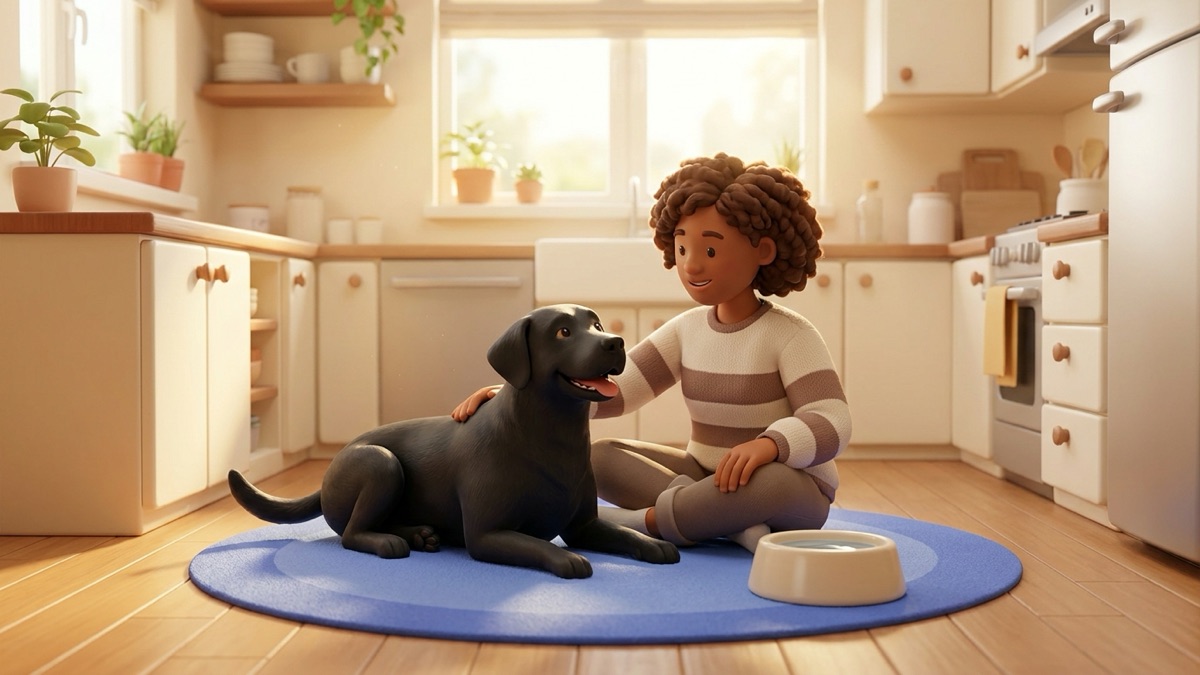
Your dog just left a puddle on the kitchen floor, or came back from the yard looking sheepish. You are wondering whether this is a bad treat or a bad day. Most dog diarrhea is the first, and this guide shows you how to tell.
Quick answer
Dog diarrhea is usually something ordinary: a stolen snack, a sudden food change, stress, or a parasite. A bright, eating adult often settles within a day or two with water and a bland diet. Call your vet if it lasts more than two days; call now for a lot of blood, vomiting with weakness, pale gums, or a vomiting puppy.
Scout's read
One or two loose poops in an adult dog who is bright, eating and drinking is a watch for 24 to 48 hours. Diarrhea past two days, a vomit or two, or a poor appetite is Call your vet today. A lot of blood, raspberry-jam diarrhea, vomiting with weakness, pale gums, or a puppy or unvaccinated dog with vomiting and diarrhea is Call a vet now.
Key takeaways
- Diarrhea is a sign, not an illness. The common causes are diet slips, sudden food changes, stress, parasites and gut infections.
- A healthy adult dog with a single bout and no other signs can usually be watched at home with fresh water and a bland diet of plain boiled chicken and white rice.
- The clock matters: more than two days of diarrhea is a same-day vet call, even in a dog who seems fine.
- Blood, vomiting, weakness, pale gums, puppies and dogs who are not fully vaccinated change the verdict to Call a vet now.
- Never give human anti-diarrhea medicines unless your vet says so. Some are harmful to dogs.
My dog has diarrhea: what counts?
Diarrhea means poop that is looser and wetter than your dog's normal, usually passed more often. Vets score poop on a 1 to 7 scale, where 2 is the ideal firm, segmented log and 7 is a watery puddle. From 4 up is loose, and 6 and 7 are diarrhea.
| Score | What it looks like | What it usually means | Verdict |
|---|---|---|---|
| 4 | Soggy log, leaves residue, loses shape when picked up | Soft stool from a diet slip, stress or a food change | Keep an eye for 24 to 48 hours |
| 5 | Soft piles with some shape | Getting close to diarrhea | Keep an eye, note how often |
| 6 | Texture but no shape, piles or spots | Diarrhea. A single episode in a bright adult often settles in a day | Call your vet if it carries on past a day or has other signs |
| 7 | Watery, flat puddles | Watery diarrhea drains fluid fast | Call your vet today; now with blood, vomiting, weakness or a puppy |
Try it
The stool score checker walks you through the 1 to 7 scale with plain descriptions, so you can score it in a few seconds and watch the trend.
Why does my dog have diarrhea?
The gut normally pulls water out of food as it moves through. When the lining is irritated, inflamed or rushing things along, less water is absorbed and the result is loose or watery poop. Something irritated the gut; the question is what, and the pattern gives clues.
Most dogs who turn up at the vet with sudden diarrhea have a large bowel (colon) upset, which tends to be mild and short-lived. Small bowel diarrhea is more often a longer-running problem that needs more of a workup. How to tell them apart is below.
Dog diarrhea causes: what causes diarrhea in dogs?
Here are the causes of diarrhea in dogs that vets see most often.
| Cause | Clues | How urgent |
|---|---|---|
| Diet slip: scraps, trash, a rich treat, something on a walk | Sudden, dog otherwise bright, often one bad day | Keep an eye |
| Sudden food change | Started within days of the new food | Keep an eye; slow the switch down |
| Stress: boarding, a move, a new pet, fireworks | Small frequent poops, urgency, mucus | Keep an eye; most settle in a few days |
| Parasites: Giardia, whipworms, hookworms, roundworms, coccidia | Can drag on for days or weeks, sometimes mucus or blood, puppies most at risk | Call your vet today with a sample |
| Gut infection, bacterial or viral | Vomiting too, low energy, poor appetite | Call your vet today; now for a puppy or unvaccinated dog |
| Toxins and poisons: human foods, plants, chemicals, bait | Drooling, vomiting, wobbliness, or nothing yet | Call a vet or poison control now |
| A swallowed object: toy, sock, bone | Vomiting, straining, belly pain, not eating | Call your vet today; now with repeated vomiting |
| Food intolerance or allergy | Comes and goes for weeks, itchy skin | Book a vet visit |
| An illness elsewhere: pancreas, liver, kidneys, inflammatory bowel disease | Weight loss, long-running diarrhea, appetite changes | Book a vet visit |
A few of these deserve a closer look.
Diet slips and food changes
Dogs eat things. A corner of pizza, the cat's food, a rich new chew, a dead thing on the trail. The gut reacts within hours to a day, you get one or two loose poops, and the dog is otherwise fine. A sudden food change does the same thing. If you just switched foods in one go, go back to mixing old and new and move over a little more each day for at least a week. If the poop softens, pause at the last ratio that worked.
Stress
Boarding, a house move, a new baby or puppy, a thunderstorm: stress is a leading cause of colitis in dogs, which is inflammation of the colon. The classic signs are small, frequent, urgent poops, often with mucus and sometimes a streak of fresh blood. Most dogs with stress colitis are back to normal within three to five days.
Parasites
Giardia, whipworms, hookworms, roundworms and coccidia all cause diarrhea, and most are invisible to the naked eye. Giardia in particular causes smelly, mucus-coated, sometimes greasy poop. A dog can carry parasites and look well, which is why diarrhea that drags past two days gets a fecal test even in a happy dog.
Infections, toxins and swallowed things
Infections usually bring vomiting, low energy and a poor appetite along with the diarrhea. Parvovirus is the serious one in puppies and dogs who are not fully vaccinated, and it is why those dogs get a Call a vet now for vomiting plus diarrhea. Toxins, from human foods and plants to rat and mouse bait, can start with diarrhea before anything else. A swallowed sock or bone can cause diarrhea, vomiting and straining together.
Heads up
If there is any chance your dog ate rat or mouse bait or another poison, call your vet or ASPCA Animal Poison Control at (888) 426-4435 (a fee may apply), even if they seem fine. Signs can take days to show.
Small bowel or large bowel: clues from the poop
Vets split diarrhea by where it starts, because the two look different and point to different causes.
| Clue | Large bowel (colon) | Small bowel |
|---|---|---|
| Amount each time | Small | Large |
| How often | Many times a day, urgent | A few times a day |
| Straining | Common | Rare |
| Mucus | Common | Rare |
| Blood | Bright red streaks | Black and tarry if any |
| Vomiting and weight loss | Uncommon | More common |
| Typical causes | Stress, diet slip, whipworms, Giardia, colitis | Food intolerance, parasites, pancreas or absorption problems |
Large bowel diarrhea is the kind most dogs with a sudden upset have, and most of them otherwise appear well. If there is slime on the poop, see mucus in dog poop. Small bowel diarrhea, especially with weight loss or a dog who seems hungry all the time, is a book-a-visit situation.
What to do if your dog has diarrhea
For an adult dog who is bright, drinking, not vomiting and has no blood in the poop, here is the usual home plan. Ask your vet first if your dog is a puppy, a senior, very small, or has a known health condition.
- Keep fresh water available all the time. A dog with diarrhea can get dehydrated quickly. Do not restrict water.
- Ask your vet about a short rest from food. Some vets suggest a brief pause from food for an adult dog so the gut can settle; others go straight to a bland diet. Puppies and small dogs should not go without food unless your vet says so.
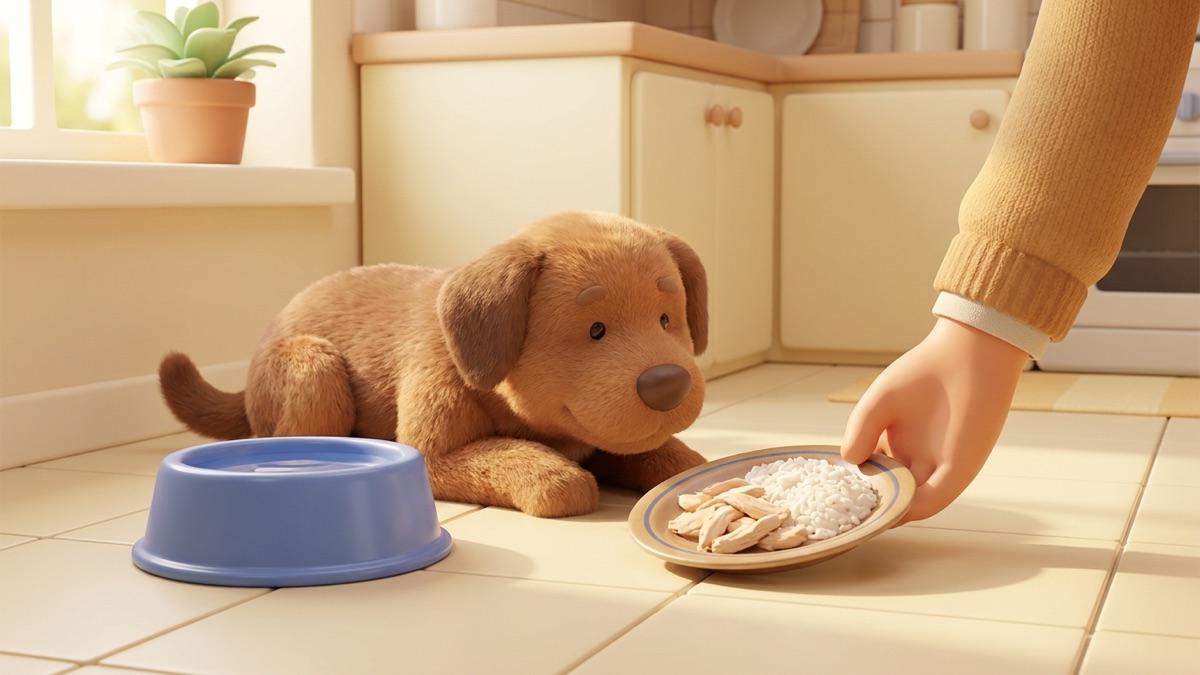
- Feed a bland diet. Plain boiled chicken (skinless, boneless, no seasoning) and plain white rice, in small meals. No butter, oil, salt or sauce. Our guide to what to feed a dog with diarrhea has portions and alternatives.
- Go back to normal food slowly. Once the poop firms up, mix the usual food back in over 7 to 10 days.
- Skip treats, chews and table food until the poop is back to a 2 or 3.
- Do not give human medicines. Some over-the-counter human anti-diarrhea medicines can be harmful to dogs and can clash with other medications. If your vet wants you to use one, they will tell you which and how much.
- Ask before adding anything else. Your vet may suggest fiber such as plain canned pumpkin by the spoonful, or a probiotic. Ask first; our guide to pumpkin for dog diarrhea explains what it can and cannot do.
Good to know
Do not switch to a new food in the middle of a bout of diarrhea, even a "sensitive stomach" one. A change on top of an upset gut is one more thing to react to.
Dog has diarrhea but acting normal
This is the question most owners are really asking. A dog who is wagging, eating, drinking and playing, with one or two loose poops and nothing else, almost always has a short-lived gut upset. Water, bland diet, watch the next 24 to 48 hours.
What changes the picture, even in a dog who seems fine:
- It has gone on for more than two days.
- It keeps coming back every week or two.
- There is blood, or a lot of mucus.
- Your dog is a puppy. Any diarrhea in a puppy, even a bright and playful one, is a Call your vet today, with a fresh sample for a parasite check.
We go deeper on the "seems fine" case, including how to watch and what to write down, in dog diarrhea but acting fine. If it is heading into a third day, dog diarrhea for 3 days explains why that is the line vets draw.
Puppies and dogs who are not fully vaccinated
Puppies have small reserves. Vomiting and diarrhea can dehydrate them quickly, and they are the age group parvovirus hits hardest: puppies from about six weeks to six months, and any dog who has not finished the vaccine series. Parvovirus causes vomiting, bloody diarrhea and lethargy, and early care makes a real difference.
So the rules are stricter:
- A puppy with diarrhea plus vomiting, low energy or no interest in food: Call a vet now.
- A dog of any age who is not fully vaccinated, with vomiting and diarrhea: Call a vet now.
- A bright, playful puppy with soft poop and nothing else: Call your vet today and bring a sample. Puppies pick up worms easily and need several fecal checks in their first year.
If you are worried about parvo specifically, our guide to parvo poop describes what owners typically see.
How to check for dehydration
Diarrhea loses water, and vomiting on top of it loses more. Two quick checks:
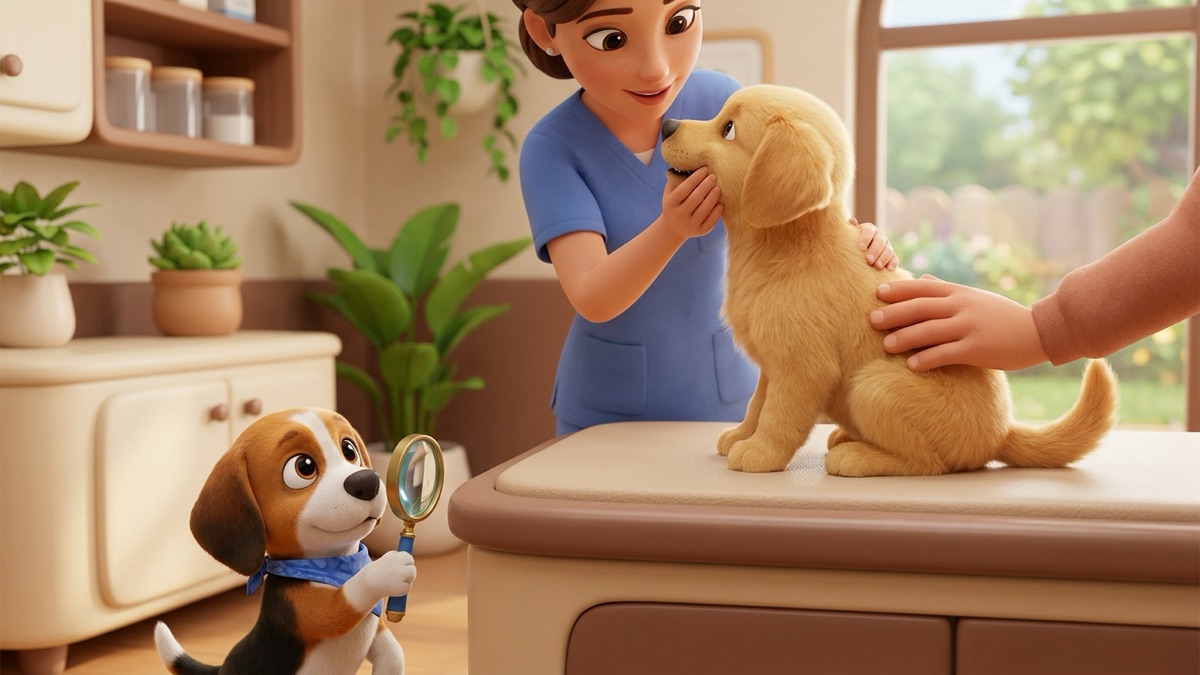
- Gums. Lift the lip. Healthy gums are light rosy pink and slick. Dry, sticky or tacky gums suggest dehydration. Pale or white gums are a Call a vet now on their own, because they can signal blood loss or shock.
- Skin. Gently lift the skin between the shoulder blades and let it go. It should fall straight back. If it stays tented or sinks back slowly, your dog may be dehydrated.
Add sunken eyes, low energy, or a dog who will not drink, and it is time to go in. A vet can replace fluids far faster than a water bowl can.
Tip
Note the time of each loose poop and each vomit on your phone. "Four watery poops and two vomits since 6am" tells your vet far more than "a lot".
What to do today
- Score the poop and take a photo in daylight, from above, before you clean up. Get close on any blood, mucus or odd bits.
- Note the time, how many times today, and whether your dog has vomited, eaten or drunk.
- Check the gums and the skin tent.
- Think back: new food, treats, trash, a stressful event, a new medication, anything chewed on a walk.
- Keep water out, start the bland diet, stop treats, and give no human medicine unless your vet says so.
- Bag a fresh sample in case you need the vet: keep it cool, in the fridge away from food for up to 24 hours.
- Watch the next 24 to 48 hours. Firmer each time is good news. Wetter, more often, or new signs is your cue to call.
When to call the vet
Call a vet now
- A lot of fresh blood, or diarrhea that is mostly blood.
- Raspberry-jam diarrhea: bloody and jelly-like, often with vomiting.
- Black, sticky, tar-like poop.
- A puppy with diarrhea plus vomiting, low energy, or no interest in food.
- A dog who is not fully vaccinated, at any age, with vomiting and diarrhea.
- Any chance your dog ate rat or mouse bait or another poison, even if they seem fine.
- Pale or white gums, collapse, severe weakness, or not able to stand.
- A swollen, tight belly with retching that brings nothing up, or repeated vomiting with belly pain.
Call your vet today
- Diarrhea lasting more than 2 days.
- Diarrhea with a poor appetite or a vomit or two, in an adult dog who is still alert.
- Any diarrhea in a puppy, even a bright and playful one.
- A small streak of fresh blood, or mucus with straining, in a dog who is otherwise well.
- Gray, greasy, or pale and bulky poop.
- Several stool changes in 24 hours, or diarrhea that keeps coming back.
- Weight loss despite a good appetite, with loose or bulky poop.
Try it
Not sure which list you are on? The should I call the vet checker asks a few questions about the poop and your dog and gives you one of the four verdicts.
Most dog diarrhea is a bad snack or a bad day, and a bright dog with fresh water and a boring meal is usually back to normal within a couple of days. The job is to notice when it is not that: the clock past two days, blood, vomiting, a flat dog, a puppy. The PoopScout app reads a photo for score, color and findings and gives you one of the same four verdicts you have read here. For everything else on loose poop, start at the dog diarrhea hub, and when in doubt, call your vet.
PoopScout guides are general information for pet owners, written from veterinary sources named above. They are not veterinary advice, they do not diagnose, and they can be wrong for your pet. If your dog or cat seems unwell, or you are worried, call your vet. In an emergency, contact your vet or the nearest emergency animal hospital right away.
Questions owners ask
What can I give my dog for diarrhea at home?
For an adult dog who is bright and not vomiting, fresh water and a bland diet of plain boiled chicken and white rice in small meals is the usual home approach, then a slow return to normal food over 7 to 10 days. Ask your vet before fasting or adding anything else, and never give human anti-diarrhea medicines unless your vet says so.
How long does dog diarrhea usually last?
A simple upset in a healthy adult dog often settles within a day or two. Vets say to call if it lasts more than two days, sooner if there is blood, vomiting, a poor appetite or low energy, and right away for a puppy or a dog who is not fully vaccinated.
Should I take my dog to the vet for diarrhea?
Not always. One or two loose poops in a bright, eating adult can be watched for 24 to 48 hours. Go the same day if it lasts more than two days, keeps coming back, or comes with a vomit or two or a poor appetite. Go now for a lot of blood, jam-like diarrhea, vomiting with weakness, pale gums, or any diarrhea with vomiting in a puppy.
What are the most common causes of diarrhea in dogs?
Diet slips (scraps, trash, rich treats), a sudden food change, stress, and parasites such as Giardia and whipworms are the everyday causes. Gut infections, toxins, swallowed objects, medication side effects and food intolerance come next. Longer-running diarrhea with weight loss can point to the pancreas, liver or an inflamed bowel, which needs a vet workup.
Can I give my dog human anti-diarrhea medicine?
Not unless your vet tells you to. Vets warn that some over-the-counter human medicines can be harmful to dogs and can clash with other medications. Call your vet first; if they want you to use one, they will tell you which and how much.
Sources
- VCA Animal Hospitals: Diarrhea in Dogs: vcahospitals.com/know-your-pet/diarrhea-in-dogs
- Cornell Riney Canine Health Center: Diarrhea: www.vet.cornell.edu/departments-centers-and-institutes/riney-canine-health-cente
- American Kennel Club: A Survival Guide for Dog Diarrhea (vet reviewed): www.akc.org/expert-advice/health/dog-diarrhea/
- VCA Animal Hospitals: Colitis in Dogs: vcahospitals.com/know-your-pet/colitis-in-dogs
- Merck Veterinary Manual (Dog Owners): Disorders of the Stomach and Intestines in Dogs: www.merckvetmanual.com/dog-owners/digestive-disorders-of-dogs/disorders-of-the-s
- VCA Animal Hospitals: Acute Hemorrhagic Diarrhea Syndrome in Dogs: vcahospitals.com/know-your-pet/hemorrhagic-gastroenteritis-in-dogs
- VCA Animal Hospitals: What to do when your puppy has diarrhea: vcahospitals.com/pediatric/puppy/health-wellness/puppy-has-diarrhea
- Cornell Riney Canine Health Center: Parvovirus, transmission to treatment: www.vet.cornell.edu/departments-centers-and-institutes/riney-canine-health-cente
- American Kennel Club: Dehydration in Dogs (vet reviewed): www.akc.org/expert-advice/health/warning-signs-dehydration-dogs/
- VCA Animal Hospitals: Testing for Pallor: vcahospitals.com/know-your-pet/testing-for-pallor
- ASPCA Animal Poison Control Center: www.aspca.org/pet-care/animal-poison-control
- Tufts Cummings School Petfoodology: How do I switch my pet's food?: sites.tufts.edu/petfoodology/2019/11/24/how-do-i-switch-my-pets-food/
- Companion Animal Parasite Council: Giardia: capcvet.org/guidelines/giardia/
- Nestle Purina Fecal Scoring System (hosted by University of Missouri Veterinary Health Center): vhc.missouri.edu/wp-content/uploads/2020/07/Nestle-Purina-Fecal-Scoring-System.p
Read next
Cat diarrhea
Cat Diarrhea: Causes and What to Do
Blood in poop
Blood in Cat Poop: What It Means and When to Worry
Worms & parasites
Worms in Dog Poop: What They Look Like
Eating, rolling, burying
Why Do Dogs Eat Poop? (And How to Stop It)
Litter box problems
Why Is My Cat Pooping Outside the Litter Box?
Mucus, texture & shape
Mucus in Dog Poop: Causes and When to Worry