
Yellow Dog Poop: What It Means and What to Do
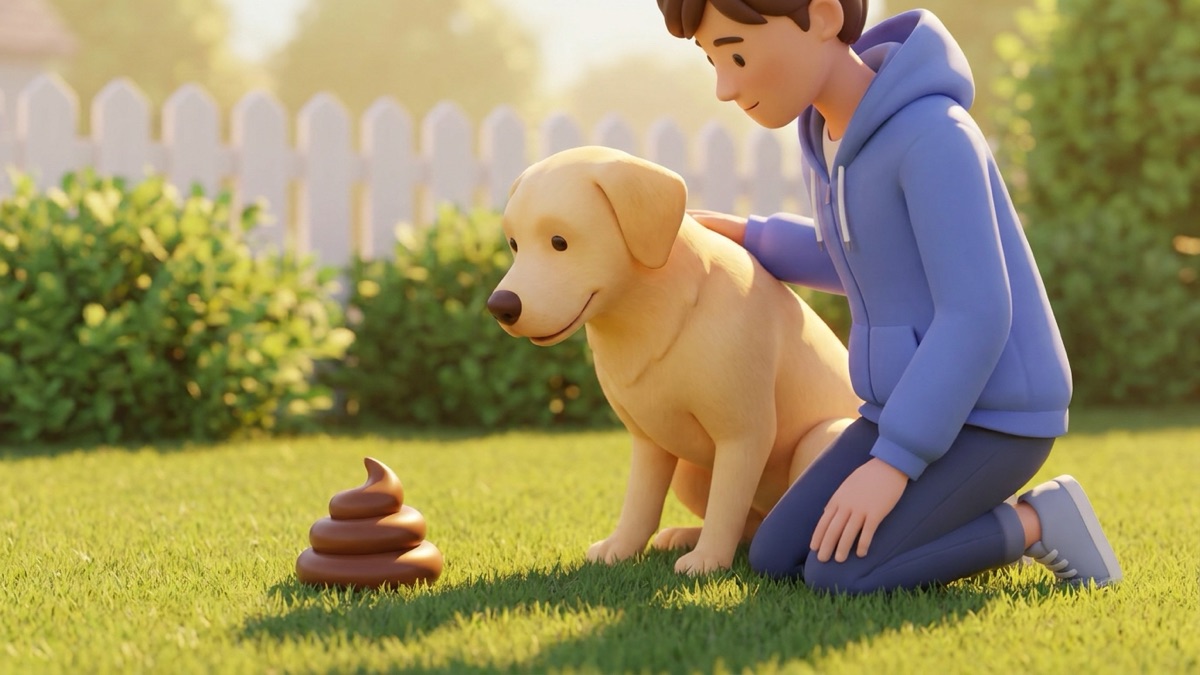
You went to pick up after your dog and the poop is mustard yellow instead of brown. Your dog may be wagging at you as if nothing happened. Here is what yellow can mean, and how to decide what to do next.
Quick answer
Yellow dog poop often means food moved through the gut too quickly for bile to turn it brown, often after a food that did not agree with your dog. It is sometimes linked to the liver, gallbladder, pancreas or parasites. One yellow poop in a bright dog is a watch. Yellow that continues needs your vet.
Scout's read
One yellow poop in a dog who is eating, drinking and acting normally is a watch for the next day or two. Yellow that continues, or comes with diarrhea, vomiting or a poor appetite, is Call your vet today. Yellow gums or eyes in a dog who seems sick, or a puppy with vomiting and diarrhea, is Call a vet now.
Key takeaways
- Poop is brown because of bile. When food rushes through the gut, the bile does not finish changing color, and the poop comes out yellow.
- The everyday cause is a food that did not agree with your dog: a sudden switch, a rich treat, table scraps or something found on a walk.
- Yellow that keeps coming, or is also greasy, pale, bulky or extra smelly, can point to the liver, gallbladder, pancreas or parasites, and needs a vet visit.
- A dog with yellow poop who is acting normal gets 24 to 48 hours of watching. Yellow diarrhea plus vomiting, a poor appetite or low energy gets a call.
- Check the gums and the whites of the eyes. A yellow tinge there is called jaundice, and it is never a wait-and-see.
Why is my dog's poop yellow?
The brown color of healthy poop comes from bile, a fluid the liver makes to help digest fat. It is stored in the gallbladder and released into the small intestine. Bile carries a yellow pigment, and as it travels along the gut, bacteria turn that pigment into the brown ones that color a normal poop.
That change takes time. Vets describe yellow or green poop as a sign that the stool may be moving through the gut too quickly. So the everyday explanation is simple: something sped the gut up, and the poop left before it finished turning brown. That is also why yellow poop is so often soft. Less often, yellow is a clue about the organs that make and move bile or digest fat.
| What you see | What it can mean | Verdict |
|---|---|---|
| One yellow or mustard poop, formed or a little soft, dog acting normal | A food that did not agree, a gut moving a bit fast | Keep an eye |
| Yellow, soft or loose poop for more than a day or two | An upset that is not settling, infection, parasites | Call your vet today |
| Yellow or pale, greasy, bulky, extra smelly poop | Fat not being digested: pancreas, bile flow, parasites such as Giardia | Call your vet today |
| Yellow diarrhea with vomiting, a poor appetite or low energy | The whole gut is involved; liver and gallbladder are on the list | Call your vet today, now for a puppy or a weak dog |
| Yellow poop with yellow gums, eyes or skin | Jaundice | Call your vet today, now if your dog seems sick |
| A yellowish slime coating on a brown poop | Mucus from an irritated colon | Keep an eye |
Try it
Not sure if what you are looking at is yellow, orange, tan or gray? The dog poop color chart shows each color side by side with what it can mean and how fast to act.
Yellow dog poop but acting normal
This is the kindest version. A dog who passes a yellow poop and then eats breakfast, plays and asks for a walk is most likely dealing with a food that did not agree. Think back over the last day or two: a new bag of food, a rich chew, a few bites from the table, something snatched from the sidewalk.
The pattern that fits Keep an eye is one or two yellow poops, formed or only a little soft, with no blood, no vomiting and a dog who is bright, hungry and drinking. Watch the next few poops over 24 to 48 hours. Keep the food the same and the water bowl full. If food was the reason, the color should drift back to brown as the gut settles.
Acting normal buys you time, not a pass. Call your vet today if the yellow is still there after a day or two, if it turns into diarrhea, or if your dog is a puppy. Most dogs carrying the parasite Giardia show no signs of illness at all, so a dog can look perfectly well while the poop tells a different story.
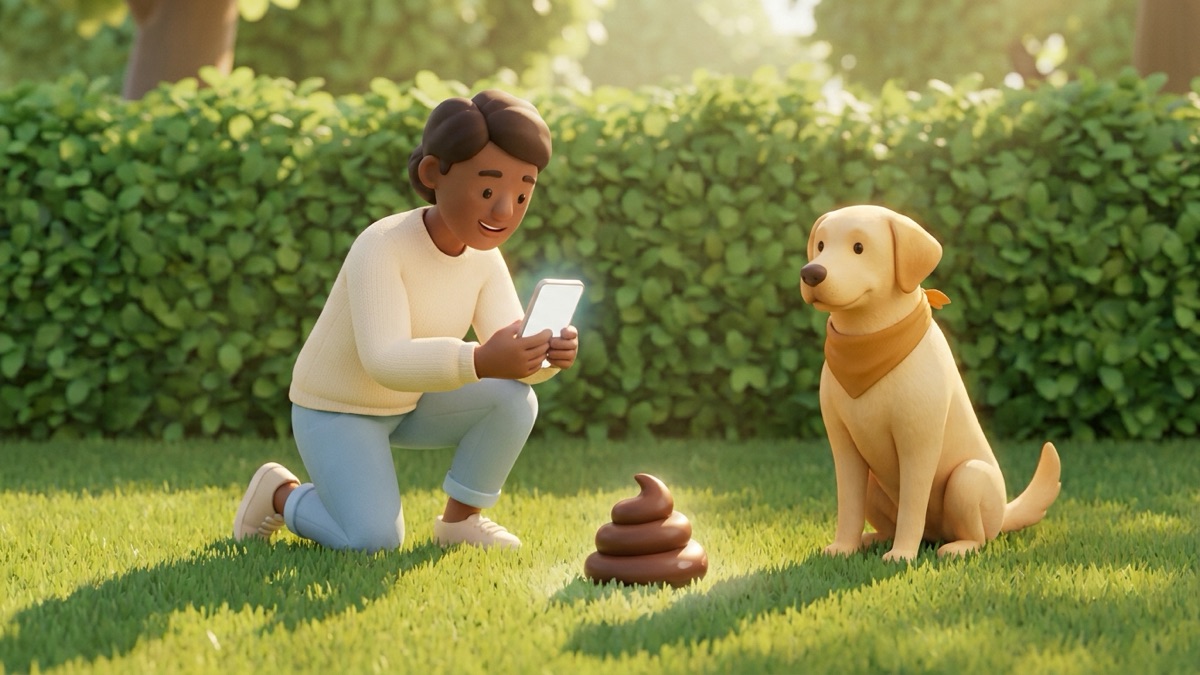
Dog yellow diarrhea: what it can mean
Yellow diarrhea in a dog is the same story at a faster speed: the gut is moving quickly enough that the poop is both loose and under-colored.
Common reasons a dog has yellow diarrhea:
- A diet slip or a sudden food change. The classic trigger. Switch foods a little at a time over at least a week.
- Infection. Gut infections speed everything up, and often come with vomiting or low energy.
- Parasites. Giardia can cause foul-smelling diarrhea, from soft to watery, sometimes fatty or with extra mucus.
- Liver or gallbladder disease. Sometimes, and there are often other signs, covered below.
The diarrhea rules matter more than the color here. A single loose yellow poop in a bright adult dog often settles within a day. Diarrhea that lasts more than 2 days, or comes with vomiting, blood, a poor appetite or low energy, is Call your vet today. Our dog diarrhea guide walks through those rules.
Heads up
A puppy, or a dog of any age who is not fully vaccinated, with vomiting plus diarrhea is Call a vet now, whatever the color. Parvovirus is the reason, and early care makes a real difference.
If your dog is also bringing up yellow liquid, our guide to a dog vomiting yellow covers that side.
Yellow, greasy and smelly: a different kind of yellow
Look at the texture as well as the color. A yellow poop that is soft because the gut was in a hurry is one thing. A yellow or pale poop that is shiny, greasy, bulky and much smellier than usual, again and again, is another.
Vets link persistently yellow or gray, greasy stool to problems digesting food. One cause is exocrine pancreatic insufficiency (EPI), which means the pancreas is not making enough digestive enzymes. Dogs with EPI often pass large amounts of pale, fatty poop and lose weight even though they eat well. Giardia can also cause fatty stool.
Greasy, pale or gray poop is Call your vet today, with a fresh sample, however your dog is acting. Our guide to gray dog poop covers that look.
Could yellow poop be a liver or gallbladder problem?
Sometimes. Vets list orange or yellow poop as a possible sign of a liver or biliary (bile system) problem. It is not the first thing to assume from one yellow poop, but it is why yellow that keeps coming should not be ignored.
The poop is not the only clue. Signs vets look for with liver disease include a poor appetite, vomiting, diarrhea, weight loss, drinking and peeing more than usual, and jaundice, which is a yellow tinge in the skin, the gums and the eyes.
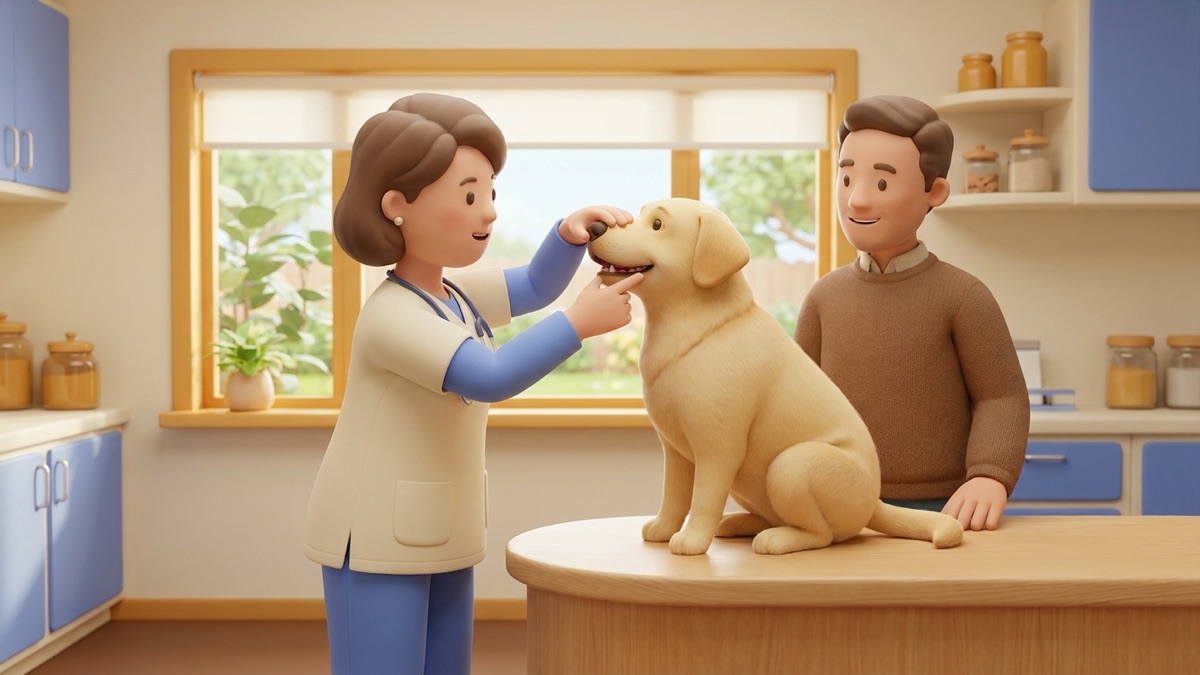
You can check for jaundice in a few seconds. In good daylight, lift your dog's upper lip and look at the gums, then look at the whites of the eyes. Healthy gums are a light rosy pink. A yellow tinge means bile pigment is building up in the body, which vets see with liver disease, a blocked bile duct, or red blood cells breaking down. All three need a vet, and a dog who is yellow and also weak, vomiting or off food needs one now.
Yellow poop, yellow mucus or orange?
Yellow poop is yellow all the way through. Yellow mucus is a clear to yellowish, jelly-like coating on a poop that is brown underneath. Mucus means the colon is irritated, and it has its own rules, covered in mucus in dog poop.
Orange sits next to yellow on the chart, and vets group the two together. The causes and verdicts overlap, with a few differences covered in orange dog poop. For every color in one place, see the dog poop colors hub.
Good to know
A photo and a description cannot show everything. Parasites such as Giardia are microscopic, and the liver and pancreas are checked with blood tests. If yellow keeps coming back, your vet's tests answer what a photo cannot.
What to do today
- Take a photo in daylight before you clean up. Shade and indoor light make yellow, tan and orange look alike.
- Note the consistency (formed, soft, no shape, or watery), the time, and how many times your dog has gone today.
- Check the gums and the whites of the eyes. Pink gums are normal. Yellow, pale or white gums mean call a vet.
- Think back over the last two days: a new food or treat, table scraps, the trash, anything chewed on a walk. If there is any chance of rat or mouse bait or another poison, call your vet or ASPCA Animal Poison Control at (888) 426-4435 (a fee may apply), even if your dog seems fine.
- Keep fresh water out all day. Keep the food the same, and ask your vet before fasting your dog or starting a bland diet.
- Bag a fresh sample if you might see the vet: a piece about an inch long in a clean sealed bag or pot, kept in the fridge away from food for up to 24 hours.
- Do not give human medicines unless your vet says so. Some can be harmful.
Tip
If your vet suggests a bland diet of plain boiled chicken and white rice, it is a short bridge, not a long-term food. If the poop is not improving after 2 to 3 days, call your vet again.
When to call the vet
Call a vet now
- A puppy with diarrhea plus vomiting, low energy, or no interest in food.
- A dog who is not fully vaccinated, at any age, with vomiting and diarrhea.
- Yellow gums, eyes or skin in a dog who is also vomiting, weak or not eating.
- Pale or white gums.
- Black, sticky, tar-like poop, or a lot of fresh blood.
- Repeated vomiting with belly pain.
- Collapse, severe weakness, or not able to stand.
Call your vet today
- Yellow poop that continues for more than a day or two.
- Yellow diarrhea lasting more than 2 days, or diarrhea with a poor appetite or a vomit or two in an adult dog who is still alert.
- Any diarrhea in a puppy, even a bright and playful one.
- Yellow, gray, greasy, or pale and bulky poop.
- A yellow tinge to the gums or eyes in a dog who otherwise seems well.
- Weight loss despite a good appetite, with loose or bulky poop.
- Several stool changes in 24 hours, or yellow poop that keeps coming back.
One yellow poop in a happy dog is most often the gut clearing something that did not agree. Yellow that stays, turns greasy, or comes with a dog who seems unwell is the kind to hand to your vet, with a photo and a sample. The PoopScout app reads a photo for score, color and findings and gives you one of the same four verdicts you have read here.
PoopScout guides are general information for pet owners, written from veterinary sources named above. They are not veterinary advice, they do not diagnose, and they can be wrong for your pet. If your dog or cat seems unwell, or you are worried, call your vet. In an emergency, contact your vet or the nearest emergency animal hospital right away.
Questions owners ask
Why is my dog's poop yellow?
Often because food moved through the gut too fast for bile to finish turning it brown, often after a food that did not agree with your dog. Yellow poop is sometimes linked to the liver, gallbladder, pancreas or parasites, which is why yellow that keeps coming needs a vet.
Is yellow dog poop an emergency?
Usually not. One yellow poop in a dog who is bright and eating is a watch for a day or two. It becomes a call to your vet today if it continues or comes with diarrhea, vomiting or a poor appetite. Yellow gums or eyes in a sick dog, or a puppy with vomiting and diarrhea, means call a vet now.
What does yellow diarrhea in a dog mean?
Yellow diarrhea means the gut is moving fast, so the poop is both loose and under-colored. A diet slip, a sudden food change, infection and parasites are common reasons, and liver or gallbladder trouble is a less common one. Call your vet if it lasts more than 2 days, sooner with vomiting, blood or low energy.
My dog has yellow poop but is acting normal. Should I worry?
Not yet. If your dog is eating, drinking and playing as usual, watch the next few poops over 24 to 48 hours and keep the food the same. If the yellow is still there after that, or anything else changes, call your vet and bring a fresh sample.
Can food cause yellow dog poop?
Yes. A food that does not agree with your dog, a sudden switch, rich table scraps or a raid on the trash can all speed the gut up and leave the poop yellow. If food is the reason, the color should drift back to brown within a day or two.
Sources
- American Kennel Club: What Your Dog's Poop Says About Their Health: www.akc.org/expert-advice/health/dogs-poop-says-health/
- VCA Animal Hospitals: Puppy Poop Colors: vcahospitals.com/pediatric/puppy/health-wellness/puppy-poop-colors-and-eco-frien
- VCA Animal Hospitals: Diarrhea in Dogs: vcahospitals.com/know-your-pet/diarrhea-in-dogs
- Merck Veterinary Manual (Dog Owners): Disorders of the Liver and Gallbladder in Dogs: www.merckvetmanual.com/dog-owners/digestive-disorders-of-dogs/disorders-of-the-l
- Merck Veterinary Manual (Professional): Bilirubin Synthesis and Metabolism in Animals: www.merckvetmanual.com/digestive-system/liver-structure-and-function/bilirubin-s
- Cornell University eClinPath: Outline of normal bilirubin metabolism: eclinpath.com/chemistry/liver/cholestasis/bilirubin/bilirubin-metabolism-2/
- VCA Animal Hospitals: Testing for Jaundice: vcahospitals.com/know-your-pet/testing-for-jaundice
- Texas A&M College of Veterinary Medicine: Examining Your Pet's Stool: vetmed.tamu.edu/news/pet-talk/examining-your-pets-stool/
- VCA Animal Hospitals: Exocrine Pancreatic Insufficiency in Dogs: vcahospitals.com/know-your-pet/exocrine-pancreatic-insufficiency-in-dogs
- VCA Animal Hospitals: Giardia in Dogs: vcahospitals.com/know-your-pet/giardia-in-dogs
- Cornell Riney Canine Health Center: Diarrhea: www.vet.cornell.edu/departments-centers-and-institutes/riney-canine-health-cente
- Cornell Riney Canine Health Center: Parvovirus, transmission to treatment: www.vet.cornell.edu/departments-centers-and-institutes/riney-canine-health-cente
- VCA Animal Hospitals: Testing for Pallor: vcahospitals.com/know-your-pet/testing-for-pallor
- ASPCA Animal Poison Control Center: www.aspca.org/pet-care/animal-poison-control
- Vets Now: Dog Poop Color Chart: static-az.vets-now.com/uploads/2025/07/Dog-Poop-Color-Infographic.pdf
Read next
Dog poop colors
Why Is My Dog's Poop Black?
Dog poop colors
Green Dog Poop: Grass, Bile or Something Else?
Dog poop colors
Orange Dog Poop: Causes and What to Do
Worms & parasites
Worms in Dog Poop: What They Look Like
Blood in poop
Why Is My Dog Pooping Blood?
Dog diarrhea
Dog Diarrhea: Causes, What to Do, When to Worry