
Guides Frequency & what is normal
How Often Should a Dog Poop?
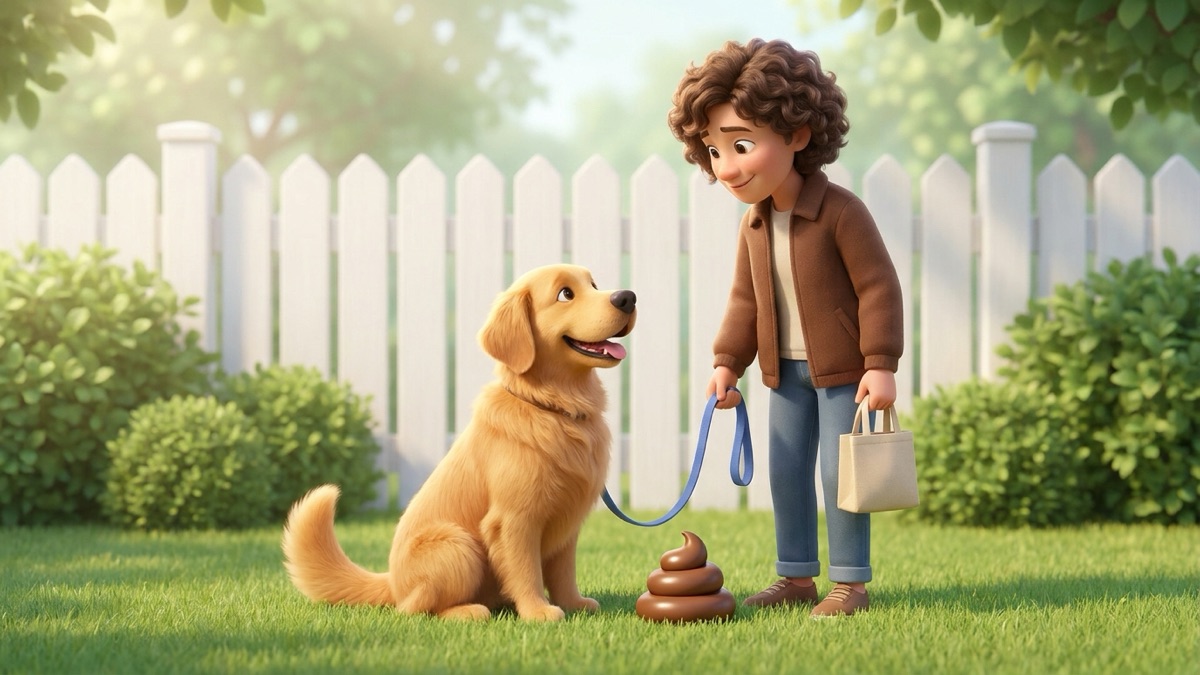
Maybe your new dog goes three times before lunch. Maybe your old dog skipped yesterday. Or you have just started counting and are wondering what the number is supposed to be. There is a normal range, and it is wider than most people expect.
Quick answer
Most healthy adult dogs poop one to two times a day, and up to three can be normal, often soon after a meal. Puppies go more often. The count matters less than the pattern: a steady rhythm of firm, brown, easy-to-pick-up poop is healthy. A sudden change that lasts more than a day or two is worth a call to your vet.
Scout's read
One to three formed, brown poops a day on a steady rhythm is normal for an adult dog. A change in how often your dog goes that lasts more than a day or two is Keep an eye. Call your vet today if it comes with diarrhea, straining, blood, or a dog who seems off.
Key takeaways
- One to two poops a day is typical for an adult dog. Three is still normal for many dogs.
- Food drives the number: how much, how often, and how much fiber is in it.
- Many dogs go shortly after eating. Puppies usually need to go within about 5 to 30 minutes of a meal.
- Your own dog's usual rhythm is the real baseline. A change from it tells you more than any chart.
- No poop for 2 to 3 days, or a dog who strains with little coming out, needs a vet.
How often should a dog poop?
Vets describe one to two bowel movements a day as normal for an adult dog, and some put the healthy range at one to three. Most dogs go at least once a day, and many time it around their meals.
There is no single correct number. What a dog eats and how often they are fed change it, so two healthy dogs in the same house can have different counts. What you are looking for is a rhythm that stays roughly the same from one week to the next, with poop that looks healthy each time.
That is why it helps to know your own dog's normal. A dog who has always gone twice a day and now goes five times is telling you something. So is a dog who has always gone twice and has not gone since yesterday morning.
How many times a day should a dog poop?
It depends on the dog in front of you. Here is how the usual patterns compare.
| Dog | Typical pattern | Good to know |
|---|---|---|
| Adult dog on their usual food | 1 to 2 times a day | Often lines up with mealtimes |
| Adult dog on a higher-fiber food | Around 3 times a day | Fiber adds bulk, so there is more to pass |
| Adult dog fed more meals or lots of extras | More often than before | More in, more out |
| Puppy | More often than an adult, usually after each meal | Our guide to how often puppies poop has the detail |
Three things move the number most:
- Fiber. Some kinds of fiber pass through the gut almost unchanged, and they tend to increase both the amount of poop and how often it comes.
- Meals. Many dogs have bowel movements that line up with their meals, so a dog fed twice a day often goes twice. Add a third meal, a training session full of treats or a generous relative, and the count goes up.
- Movement and water. Too little exercise and not drinking enough are both common reasons for a dog to go less often and pass harder, drier poop.
Cats run on a different schedule, covered in how often do cats poop.
How long after a dog eats does it poop?
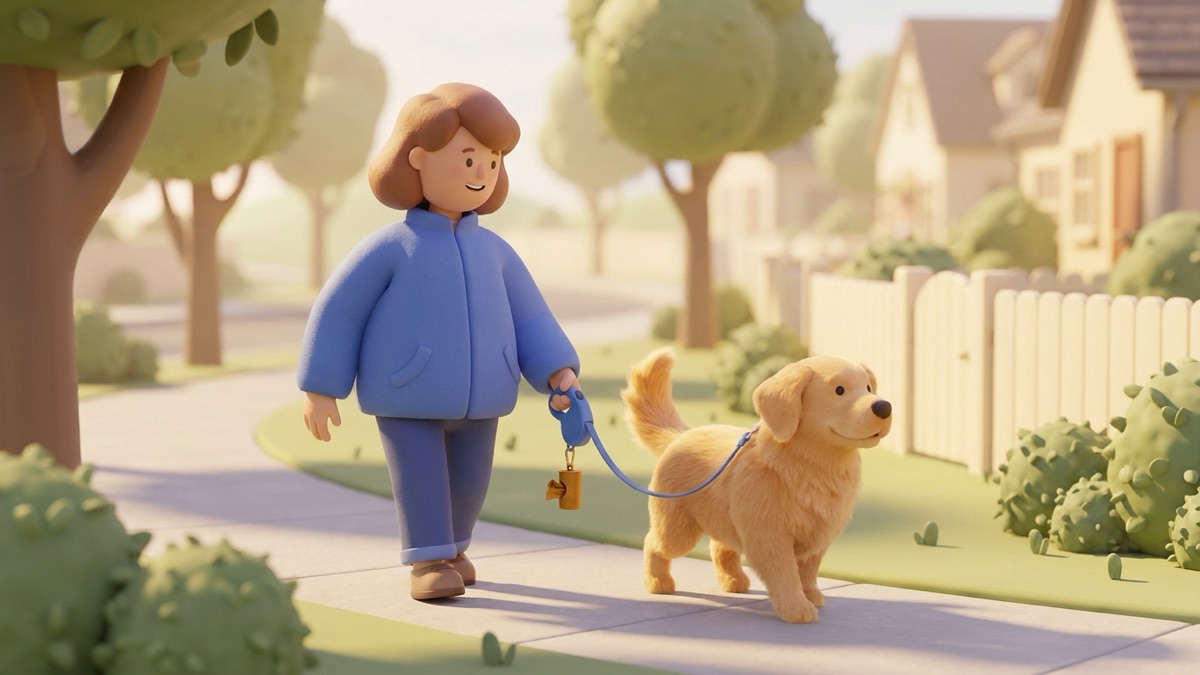
Often not long. When food arrives in the stomach, the colon answers with strong waves of movement that push along what is already there. Vets call this the gastrocolic reflex, and it is common after a meal. It is the reason so many dogs ask to go out soon after breakfast.
Puppies show it most clearly. A puppy usually needs to go within about 5 to 30 minutes of eating, and the younger the puppy, the sooner. Adult dogs have more control and can wait longer, but many still go shortly after a meal.
What comes out is not the meal that just went in. The stomach takes a few hours to empty, and studies of healthy dogs put the whole trip from bowl to lawn at roughly one to two days, tending to take longer in big dogs than in small ones. So if your dog stole something last night, expect to see the evidence tomorrow or the day after.
Tip
Feed at the same times each day and walk shortly after. Because so many dogs go soon after eating, regular meals tend to mean regular poops, and that makes any change easy to spot.
Why does my dog poop so much?
Start with the harmless reasons, because they are the most common. More food, more meals, more treats, a new food, or a food with more fiber will all raise the count. If the poop still looks healthy and your dog is their usual self, a higher number on its own is not a problem.
It is different when the poop changes too. Vets list several conditions that increase how often a dog goes or how much they pass: intestinal parasites, food sensitivities, long-running gut inflammation, and problems digesting or absorbing food. What the extra poops look like points to which one.
| What you notice | What it can mean | Verdict |
|---|---|---|
| More poops than usual, still firm and brown | More food, more meals or more fiber | All clear |
| More poops, softer than usual | A diet slip, a fast food change or stress | Keep an eye for 24 to 48 hours |
| Many small, urgent poops, often with mucus or straining | An irritated colon (colitis) | Call your vet today |
| Large, pale, loose, smelly poops, with a big appetite or weight loss | Food is not being digested or absorbed well | Call your vet today |
| Loose poop that lasts more than 2 days, or keeps coming back | Parasites, infection or a food problem | Call your vet today |
Small, frequent, urgent poops are the mark of the large intestine. A dog with an inflamed colon strains and passes small amounts many times a day, often with slime and sometimes a streak of red blood. Our guide to colitis in dogs explains it. Loose or watery poop of any kind follows the rules in dog diarrhea.
Parasites deserve a mention because you often cannot see them. Many only show on a vet's fecal test, so a dog who is pooping more for no clear reason should have a sample checked. Our guide to worms in dog poop covers the ones you can see.
What if my dog is pooping less than usual?
Most dogs go at least once a day, so a skipped day is worth noticing. In a dog who is eating, playing and comfortable it is a Keep an eye, not an alarm. A dog who ate lightly yesterday may simply have less to pass. Some vets start to be concerned once a dog has gone a day to a day and a half with nothing.
Fewer poops that are also hard and dry point to constipation. The common causes are not drinking enough, too little exercise, a sudden food change, and swallowed things such as bone, hair or plant material. Call your vet if there has been no poop for 2 to 3 days, and sooner if your dog keeps straining, seems sore or stops eating. Our guide to a dog not pooping walks through what to check.
Heads up
Vomiting with no poop coming out, or repeated vomiting with belly pain, can mean a blockage. That is Call a vet now. So is a swollen, tight belly with retching that brings nothing up.
What a healthy poop looks like
Frequency is only one of the things worth checking. Each time you pick up, look for the same four things vets do:
- Color. Chocolate brown is the goal.
- Consistency. Firm, segmented and easy to pick up. That is a 2 on the 1 to 7 stool scale many vets use, where 1 is hard pellets and 7 is watery.
- Coating. No slime or mucus on the outside.
- Contents. No blood, worms, rice-like bits or things that should not be there.
Three poops a day at a score of 2 is a better sign than one poop a day at a score of 6.
Try it
Not sure what number you are looking at? The stool score checker walks you through the 1 to 7 scale with plain descriptions, so you can score a poop in a few seconds.
For more on what counts as normal, see the frequency and normal poop hub.
What to do today
- Count for three or four days. Note the time of each poop and give each one a score from 1 to 7.
- Take a photo of anything that looks different from your dog's usual.
- List what has changed lately: the food, the amount, treats, mealtimes, walks, a stressful event.
- Keep meals and walks at regular times, and keep fresh water out all day.
- If you are changing foods, do it gradually over at least a week, and slow down if the poop gets soft.
- Bag a fresh sample if you are going to call the vet: a piece about an inch long in a clean sealed bag or pot.
- Do not give human laxatives or other human medicines unless your vet says so.
When to call the vet
Call a vet now
- Repeated vomiting with belly pain, or vomiting with no poop coming out.
- A swollen, tight belly with retching that brings nothing up, drooling, or restlessness.
- A lot of fresh blood, or black, sticky, tar-like poop.
- A puppy with diarrhea plus vomiting, low energy, or no interest in food.
- A dog who is not fully vaccinated, at any age, with vomiting and diarrhea.
- Pale or white gums, collapse, or severe weakness.
Call your vet today
- No poop for 2 to 3 days, or repeated straining that only produces small, hard pieces.
- Several stool changes in 24 hours, or poop problems that keep coming back.
- Diarrhea lasting more than 2 days, or any diarrhea in a puppy.
- Many small poops with mucus, straining, or a small streak of fresh blood.
- Weight loss despite a good appetite, with loose or bulky poop.
- A lasting change in how often your dog goes that you cannot explain.
If you are unsure which list you are on, the should I call the vet checker asks a few questions and gives you one of the four verdicts.
Once or twice a day, firm and brown, on a rhythm you could set a clock by: that is what healthy looks like for most dogs. The PoopScout app reads a photo for score, color and findings and gives you one of the four verdicts. Learn your dog's normal, notice when it shifts, and let your vet look into any change that does not settle.
PoopScout guides are general information for pet owners, written from veterinary sources named above. They are not veterinary advice, they do not diagnose, and they can be wrong for your pet. If your dog or cat seems unwell, or you are worried, call your vet. In an emergency, contact your vet or the nearest emergency animal hospital right away.
Questions owners ask
How many times a day should a dog poop?
One to two times a day is normal for most adult dogs, and up to three can still be normal, especially on a higher-fiber food or with more meals. Puppies go more often. A steady pattern of firm, brown poop matters more than the exact number.
How long after a dog eats does it poop?
Many dogs poop shortly after a meal, because eating triggers a wave of movement in the colon. Puppies usually need to go within about 5 to 30 minutes of eating. Adult dogs can wait longer. The poop that follows a meal is from food eaten earlier, since a meal takes roughly one to two days to travel the whole gut.
Why does my dog poop so much?
The common harmless reasons are more food, more meals or treats, and a food with more fiber. If the extra poops are soft, small and urgent, slimy, very large and pale, or come with weight loss, something is irritating the gut or food is not being digested well, and that is a call to your vet.
Is it normal for a dog to poop only once a day?
Yes. Most dogs poop at least once a day, and once a day is normal as long as the poop is formed, passes easily and your dog is comfortable.
How long can a dog go without pooping?
Most dogs poop at least once a day. One missed day in a dog who is eating and comfortable is something to keep an eye on. Call your vet if there has been no poop for 2 to 3 days, and sooner if your dog is straining, sore, vomiting or off their food.
Sources
- American Kennel Club: How Often Should My Dog Be Pooping? (quotes Jerry Klein, DVM): www.akc.org/expert-advice/health/how-often-should-my-dog-be-pooping/
- VCA Animal Hospitals: Dog Behavior Problems: House Soiling: vcahospitals.com/know-your-pet/dog-behavior-problems-house-soiling
- VCA Animal Hospitals: Constipation in Dogs: vcahospitals.com/know-your-pet/constipation-in-dogs
- VCA Animal Hospitals: Feeding Times and Frequency for Your Dog: vcahospitals.com/know-your-pet/feeding-times-and-frequency-for-your-dog
- VCA Animal Hospitals: Diarrhea in Dogs: vcahospitals.com/know-your-pet/diarrhea-in-dogs
- American Kennel Club: Puppy Potty Training Schedule: www.akc.org/expert-advice/training/puppy-potty-training-timeline/
- Merck Veterinary Manual (Professional): Constipation, Obstipation, and Megacolon in Small Animals: www.merckvetmanual.com/digestive-system/diseases-of-the-stomach-and-intestines-i
- Merck Veterinary Manual (Dog Owners): Disorders of the Stomach and Intestines in Dogs: www.merckvetmanual.com/dog-owners/digestive-disorders-of-dogs/disorders-of-the-s
- Merck Veterinary Manual (Dog Owners): Pancreatitis and Other Disorders of the Pancreas in Dogs: www.merckvetmanual.com/dog-owners/digestive-disorders-of-dogs/pancreatitis-and-o
- Tufts Cummings School Petfoodology: Fiber Frustrations: sites.tufts.edu/petfoodology/2019/11/04/fiber-frustrations/
- Tufts Cummings School Petfoodology: How do I switch my pet's food?: sites.tufts.edu/petfoodology/2019/11/24/how-do-i-switch-my-pets-food/
- Deschamps et al., International Journal of Biological Sciences (2022): how digestion changes with dog size: pmc.ncbi.nlm.nih.gov/articles/PMC9379419/
- Nestle Purina Fecal Scoring System (hosted by University of Missouri Veterinary Health Center): vhc.missouri.edu/wp-content/uploads/2020/07/Nestle-Purina-Fecal-Scoring-System.p
Read next
Frequency & what is normal
How Often Do Cats Poop? Normal, Too Much, Too Little
Blood in poop
Why Is My Dog Pooping Blood?
Worms & parasites
Worms in Dog Poop: What They Look Like
Dog diarrhea
What to Feed a Dog With Diarrhea (Bland Diet)
Vomiting (adjacent)
Dog Vomiting and Diarrhea at the Same Time
Mucus, texture & shape
Mucus in Dog Poop: Causes and When to Worry