
What to Feed a Dog With Diarrhea (Bland Diet)
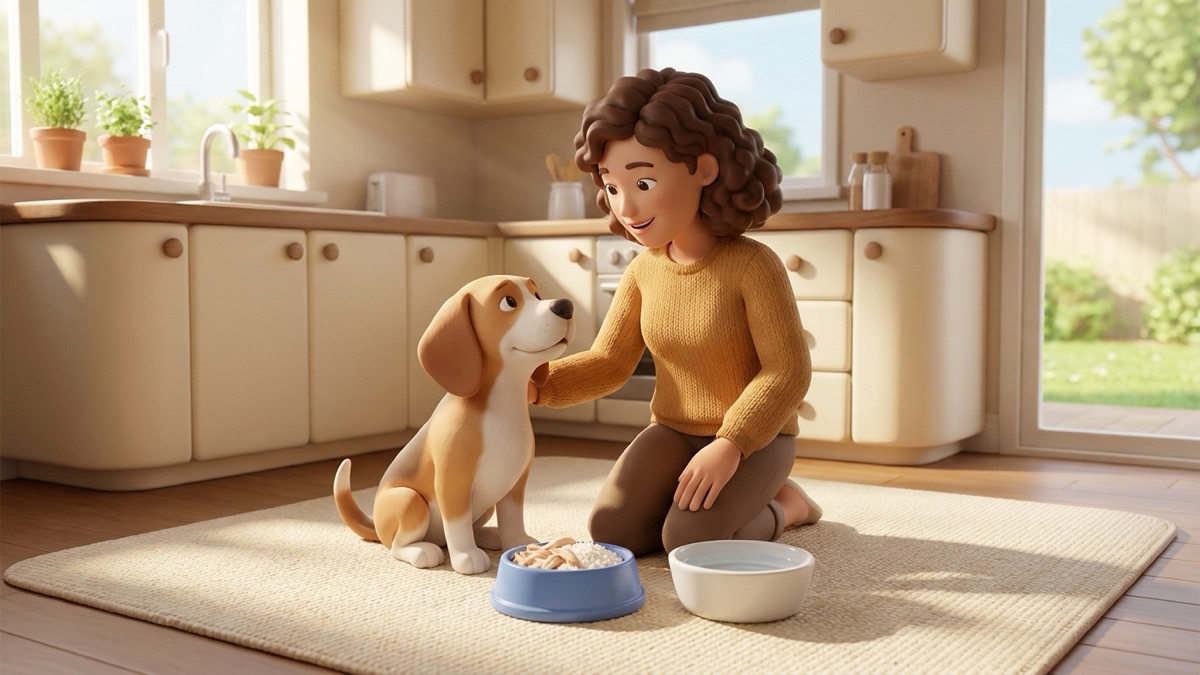
Your dog has the runs, the water bowl is full, and dinner time is coming. Do you feed the usual food, something plain, or nothing at all? This guide gives you the plan most vets use for a simple upset, how to make it, and the signs that mean food is not the answer.
Quick answer
Feed a dog with diarrhea small, frequent meals of a bland diet: plain boiled skinless chicken and plain white rice, about two parts rice to one part chicken, with fresh water always available. Check with your vet first, use it for a few days only, then switch back to normal food over 7 to 10 days.
Scout's read
A bland diet is for an adult dog who is bright, drinking and not vomiting, with no blood in the poop. Watch for 24 to 48 hours. No improvement in two to three days, a poor appetite, or any diarrhea in a puppy is Call your vet today. A lot of blood, black tarry poop, pale gums, or vomiting with weakness is Call a vet now.
Key takeaways
- The standard bland diet for dogs is plain boiled skinless chicken and plain white rice, with nothing added.
- Feed small meals often, keep fresh water out all the time, and stop treats and table food.
- A bland diet is short-term. It is not a complete and balanced diet, so it is for a few days, not weeks.
- Ask your vet before you fast your dog or change the food, especially for puppies, small dogs, seniors and dogs with a health condition.
- Food only helps a mild upset. Blood, vomiting, low energy or diarrhea past two days needs a vet, not a recipe.
What to feed dogs with diarrhea: the plan at a glance
This is the usual home plan for a healthy adult dog with a simple upset. Call your vet first, because diarrhea has many causes and the right diet depends on the cause.
| Stage | What to feed | How long |
|---|---|---|
| 1. Settle | Fresh water always. Your vet may suggest a short rest from food, or going straight to stage 2 | As your vet advises |
| 2. Bland diet | Small, frequent meals of plain boiled chicken and white rice | A few days, until the poop firms up |
| 3. Switch back | Mix normal food into the bland diet, a little more each day | 7 to 10 days |
| 4. Back to normal | Usual food. Treats and chews return last | Ongoing |
If the poop is not clearly improving within two to three days on the bland diet, stop and call your vet.
Try it
Use the stool score checker to score each poop from 1 to 7. A steady move back toward a 2 or 3 tells you when to start stage 3.
Bland diet for dogs: what it is and why vets use it
A bland diet is plain, low-fat food that is easy to digest: little fat, no seasoning, and simple ingredients your dog already tolerates.
It is not a cure. Many short bouts of diarrhea in healthy adult dogs settle on their own, and the bland diet keeps your dog fed without adding to the problem. Most dogs with an occasional short upset can go back to their regular food after a few days.
Chicken and rice for dogs: how to make it
This is the bland diet most vets mean.
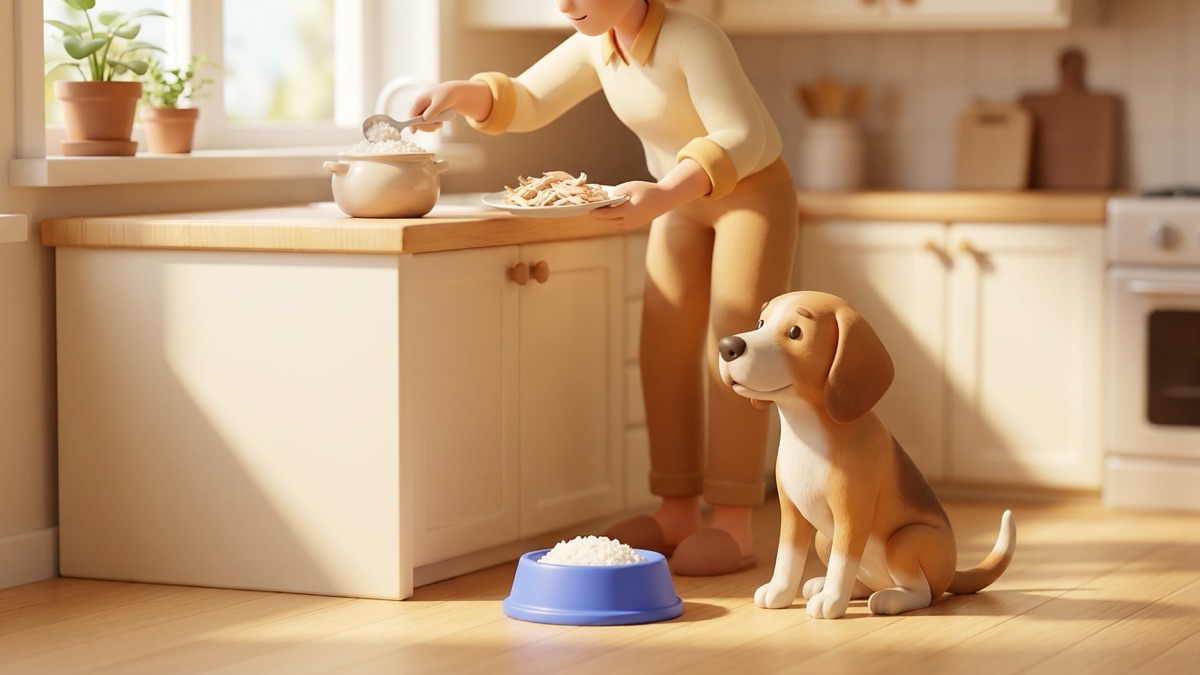
- Use skinless, boneless chicken breast. Boil it in plain water until it is cooked through. No salt, oil, butter or seasoning.
- Cook plain white rice. White rice is gentler on an upset gut than brown.
- Shred or chop the chicken into small, bite-sized pieces. Check that there is no bone.
- Mix about two parts rice to one part chicken.
- Serve small meals spread through the day instead of one or two large ones.
Cooked chicken keeps in the fridge for several days, so you can make one batch. How much to feed in a day depends on your dog's size and normal food, so ask your vet for an amount when you call.
Good to know
Chicken and rice on their own are not a complete and balanced diet. A few days will not cause a problem. Fed for weeks or months, a diet like this can cause serious harm.
Other bland food for dogs with diarrhea
If your dog cannot have chicken, or will not eat it, there are other options. Leave out any ingredient your dog is allergic to or does not tolerate.
| Food | How to serve it | Watch out for |
|---|---|---|
| Boiled skinless chicken breast | Plain, shredded, with white rice | Skin and bones |
| Cooked turkey breast | Plain, chopped, with white rice | Skin, seasoning, deli meats |
| Low-fat ground beef | Cooked plain, with white rice | Can be too fatty for some dogs |
| Plain cooked pasta | In place of rice | Sauce, butter, oil |
| A veterinary digestive diet | As your vet directs | Needs your vet to recommend it |
| Plain canned pumpkin | By the spoonful, mixed into a meal, if your vet agrees | Pie mix, added salt, sugar or spices |
A veterinary digestive diet is the one option here that is made for this job. These foods are typically lower in fat and easy to digest.
Should I fast my dog first?
Maybe, and only on your vet's advice. For an otherwise healthy adult dog, some vets suggest holding back food for a short time, often 12 to 24 hours, so the gut can rest before the bland diet starts. Others go straight to small bland meals.
Do not fast a puppy, a very small dog, or a dog with a health condition unless your vet tells you to. And never take the water away. A dog with diarrhea can get dehydrated quickly.
Pumpkin, probiotics and other add-ins
Pumpkin. Plain canned pumpkin contains soluble fiber, which absorbs water and can add bulk to loose poop. Use plain pumpkin only. Pumpkin pie mix has added sugar and spices and may contain xylitol, a sweetener that is toxic to dogs. Pumpkin has its limits: the amount of fiber in a spoonful is small, and it suits mild cases only. Our guide to pumpkin for dog diarrhea goes into the detail.
Probiotics. Your vet may suggest a veterinary probiotic to help the gut settle. Ask which one, and check before adding anything else to the bowl.
Human medicines. Do not give over-the-counter human anti-diarrhea medicines unless your vet says so. Some can be harmful to dogs and can clash with other medicines.
Food for dogs with diarrhea: what to avoid
Some foods make an upset gut worse, and a few are dangerous.
- Fatty and rich foods. Bacon, ham, chicken skin, butter and oil. Fat can cause vomiting and diarrhea, and in some dogs pancreatitis (an inflamed pancreas).
- Milk and other dairy. Dogs do not digest milk sugar well, and dairy can cause diarrhea.
- Onion, garlic and chives. These are toxic to dogs. Watch for onion and garlic powder in ready-made foods such as baby food.
- Seasoning and sauces. They can irritate the gut.
- Bones. They can injure or block the gut.
- Treats, chews and table scraps. Stop them until the poop is back to normal.
- A brand new food. Do not switch to a different everyday food in the middle of a bout.
Heads up
If your dog's diarrhea started after eating something it should not have, such as chocolate, a toxic food, a plant or a chemical, do not try to fix it with food. Call your vet or ASPCA Animal Poison Control at (888) 426-4435 (a fee may apply), even if your dog seems fine.
How long to feed a bland diet, and how to switch back
A bland diet is for a few days. Once the poop has firmed up, move back to normal food gradually over 7 to 10 days. Start with mostly bland food and a little of the usual food, then shift the balance a little more each day.
If the poop softens again on the way back, pause at the last mix that worked before moving on.
Best food for a dog with diarrhea that keeps coming back
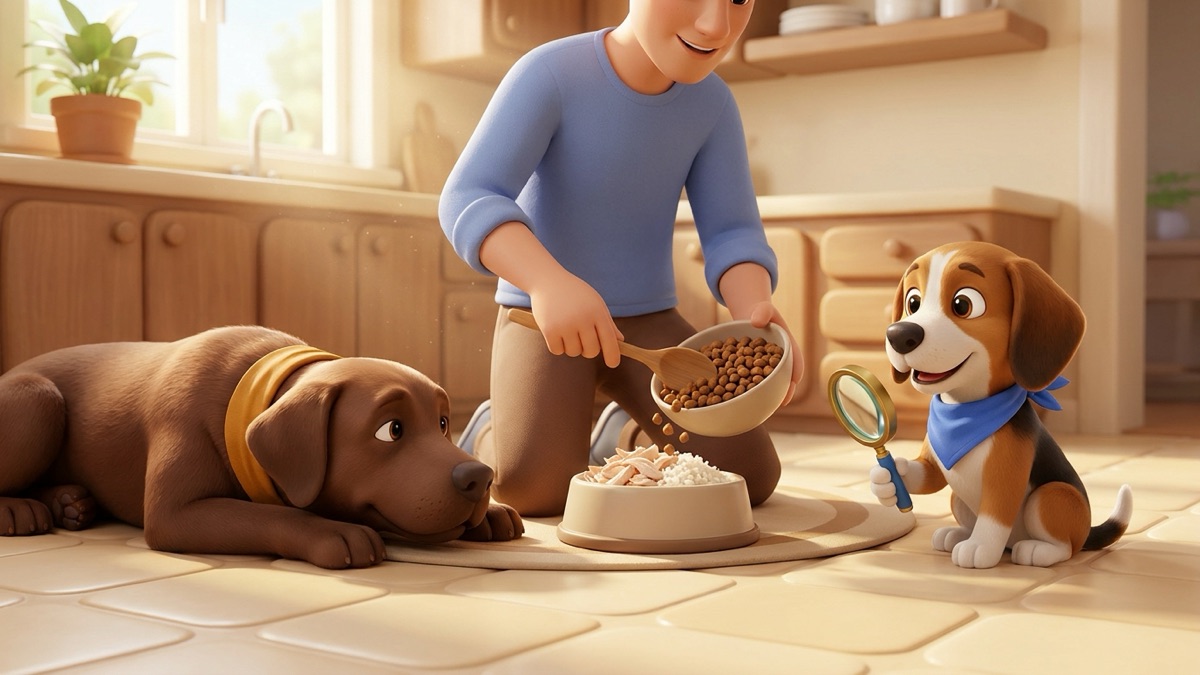
If the diarrhea has gone on for weeks, or keeps returning, chicken and rice is the wrong tool. Long-running diarrhea has many possible causes, including parasites, gut inflammation and trouble with high-fat food. A true food allergy is one of the least likely.
There is no single best food for these dogs. Depending on the cause, a vet may try a lower-fat, highly digestible diet, a diet with more fiber (which often helps dogs with colitis, an inflamed colon), or a strict food trial that runs for weeks. Change one thing at a time, and keep a diary of food and poop. If you are at day three, read dog diarrhea for 3 days.
What to do today
- Check your dog over: eating, drinking, energy, gums, vomiting, blood. Our guide to a dog with diarrhea who is acting fine has the full checklist.
- Call your vet and ask whether a bland diet suits your dog, whether to rest the gut first, and how much to feed.
- Keep fresh water available all the time.
- Feed small meals of plain chicken and white rice, and stop treats, chews and table food.
- Take a photo of each poop and score it, so you can see the trend.
- Give no human medicine unless your vet says so.
- If things are not improving within two to three days, stop and call.
When to call the vet
Call a vet now (an emergency clinic if your vet is closed):
- A lot of fresh blood, or diarrhea that is mostly blood.
- Raspberry-jam diarrhea: bloody and jelly-like, often with vomiting.
- Black, sticky, tar-like poop.
- A puppy with diarrhea plus vomiting, low energy, or no interest in food.
- A dog who is not fully vaccinated, at any age, with vomiting and diarrhea. Parvovirus is the reason, and it cannot be fed away.
- Any chance your dog ate rat or mouse bait or another poison, even if they seem fine.
- Pale or white gums, collapse, or severe weakness.
- Repeated vomiting with belly pain.
Call your vet today:
- Diarrhea lasting more than 2 days, or no improvement after two to three days on a bland diet.
- Any diarrhea in a puppy, even a bright and playful one.
- Diarrhea with a poor appetite or a vomit or two, in an adult dog who is still alert.
- A small streak of fresh blood, or mucus with straining.
- Diarrhea that keeps coming back, or weight loss with loose poop.
If your dog is vomiting as well, read dog vomiting and diarrhea before you offer any food. For causes and the bigger picture, start with our main guide to dog diarrhea or the dog diarrhea hub. The PoopScout app reads a photo for score, color and findings and gives you one of these four verdicts.
Plain chicken, plain rice, plenty of water, small meals, a few days. That is the whole recipe for a simple upset. If the poop is not heading back toward normal by day two or three, the next step is your vet.
PoopScout guides are general information for pet owners, written from veterinary sources named above. They are not veterinary advice, they do not diagnose, and they can be wrong for your pet. If your dog or cat seems unwell, or you are worried, call your vet. In an emergency, contact your vet or the nearest emergency animal hospital right away.
Questions owners ask
What is the best food for a dog with diarrhea?
For a short bout in a healthy adult dog, vets usually suggest small, frequent meals of a bland diet such as plain boiled skinless chicken and white rice, or a veterinary diet made for digestive upsets. Check with your vet first and keep fresh water out.
How much chicken and rice should I feed my dog with diarrhea?
A common mix is about two parts cooked white rice to one part cooked skinless chicken breast, split into several small meals. The total amount depends on your dog's size and usual food, so ask your vet how much to feed in a day.
How long should a dog stay on a bland diet?
A few days. Chicken and rice is not a complete and balanced diet, so it is for short-term use only. If the poop is not improving within two to three days, call your vet. Once it firms up, switch back to normal food over 7 to 10 days.
Should I stop feeding my dog if they have diarrhea?
Only if your vet says so. Some vets suggest a short rest from food for a healthy adult dog, and others go straight to a bland diet. Puppies, very small dogs and dogs with a health condition should not be fasted unless a vet advises it. Never take water away.
Can I give my dog yogurt or milk for diarrhea?
Leave out milk and other dairy unless your vet suggests it, because dairy can cause diarrhea in dogs. Butter, oil and rich foods can make things worse too. Stick to plain, low-fat foods your vet has agreed to.
Sources
- Tufts Cummings School Petfoodology: Does My Pet Need a 'Bland Diet'?: sites.tufts.edu/petfoodology/2022/02/22/does-my-pet-need-a-bland-diet/
- Cornell Riney Canine Health Center: Diarrhea: www.vet.cornell.edu/departments-centers-and-institutes/riney-canine-health-cente
- VCA Animal Hospitals: Diarrhea in Dogs: vcahospitals.com/know-your-pet/diarrhea-in-dogs
- VCA Animal Hospitals: 8 Home Remedies for Dog Diarrhea and 2 That Could Be Dangerous: vcahospitals.com/resources/conditions-dog/stomach-digestion/8-home-remedies-for-
- VCA Animal Hospitals: Gastroenteritis in Dogs: vcahospitals.com/know-your-pet/gastroenteritis-in-dogs
- American Kennel Club: A Survival Guide for Dog Diarrhea: www.akc.org/expert-advice/health/dog-diarrhea/
- American Kennel Club: Best Foods to Soothe Your Dog's Upset Stomach: www.akc.org/expert-advice/nutrition/food-for-dogs-stomach-upset/
- American Kennel Club: Can Pumpkin Help With Dog Diarrhea?: www.akc.org/expert-advice/nutrition/can-pumpkin-help-with-dog-diarrhea/
- Tufts Cummings School Petfoodology: The Problem with Pumpkin: sites.tufts.edu/petfoodology/2017/09/01/the-problem-with-pumpkin/
- Tufts Cummings School Petfoodology: What's the Best Diet for Dogs with Chronic Diarrhea?: sites.tufts.edu/petfoodology/2023/03/06/whats-the-best-diet-for-dogs-with-chroni
- Tufts Cummings School Petfoodology: How do I switch my pet's food?: sites.tufts.edu/petfoodology/2019/11/24/how-do-i-switch-my-pets-food/
- ASPCA Animal Poison Control: People Foods to Avoid Feeding Your Pets: www.aspca.org/pet-care/animal-poison-control/people-foods-avoid-feeding-your-pet
Read next
Dog diarrhea
Dog Diarrhea: Causes, What to Do, When to Worry
Dog diarrhea
My Dog Has Diarrhea but Is Acting Fine
Dog poop colors
Green Dog Poop: Grass, Bile or Something Else?
Blood in poop
Dog Poop Like Jelly With Blood: What It Means
Litter box problems
Why Is My Cat Pooping Outside the Litter Box?
Mucus, texture & shape
Mucus in Dog Poop: Causes and When to Worry