
Dog Vomiting and Diarrhea at the Same Time
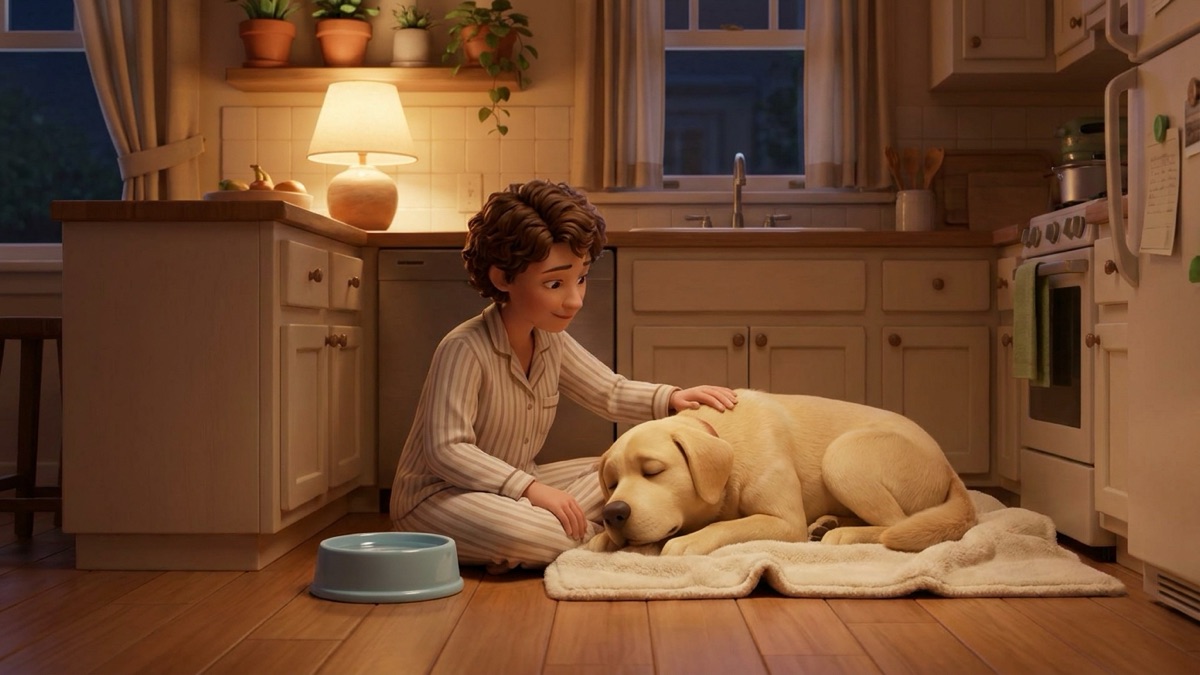
It is the middle of the night, there is a puddle by the back door and another on the rug, and your dog is looking at you with wet eyes. One end would be bad enough. Both ends at once feels like an emergency. Sometimes it is, and you can usually tell which within a minute or two.
Quick answer
A dog with vomiting and diarrhea at the same time usually has an upset stomach and gut (gastroenteritis), often from something eaten, a sudden food change, parasites or an infection. Losing fluid from both ends dehydrates a dog quickly, so call your vet the same day. A puppy, an unvaccinated dog, blood or weakness means call a vet now.
Scout's read
Vomiting and diarrhea together is a same-day call, even in an adult dog who still seems bright. A puppy, a dog who is not fully vaccinated, blood, vomiting that keeps coming, a swollen or sore belly, pale gums or a weak, flat dog is Call a vet now.
Key takeaways
- Vomiting plus diarrhea is a step up from either one alone, because the dog is losing fluid twice as fast and may not keep water down.
- The most common cause in an adult dog is a diet slip. The dangerous causes look the same in the first hour, which is why this is a same-day call.
- Puppies and dogs who are not fully vaccinated get Call a vet now, every time. Parvovirus is the reason.
- Keep water available, and ask your vet before you fast your dog or start a bland diet.
- Never give human medicines unless your vet says so. Some are harmful to dogs.
Why is my dog throwing up and having diarrhea?
Vets call inflammation of the stomach and intestines gastroenteritis. It is a description, not a cause. The stomach is irritated, so food and water come back up. The intestines are irritated, so everything rushes through. Dogs with it often bring up foamy, yellowish bile once the stomach is empty, pass large amounts of diarrhea several times a day, and seem quieter and less hungry than usual.
Many things can set it off. Some are minor and some are not, and from the outside they overlap.
| Possible cause | Clues you might notice | What it usually means for you |
|---|---|---|
| A diet slip (table scraps, garbage, spoiled food) or a sudden food change | A vomit or two, loose poop, a dog who is still alert | Call your vet today |
| Parasites or a gut infection | Smelly diarrhea, low energy, often a young dog | Call your vet today; now for a puppy |
| Parvovirus | A puppy or unvaccinated dog, tired first, then vomiting and foul, often bloody diarrhea | Call a vet now |
| Acute hemorrhagic diarrhea syndrome | Sudden vomiting and raspberry-jam diarrhea in a dog who was fine yesterday | Call a vet now |
| A swallowed object | Vomiting that will not stop, belly pain, straining or very little poop | Call a vet now |
| Pancreatitis | Vomiting, a sore belly, a "praying" stretch, sometimes after a fatty meal | Call a vet now with belly pain |
| Poison or a toxic food | Sudden signs, something chewed or missing | Call a vet now |
Diseases outside the gut, such as kidney or liver trouble, can also cause both signs. That is one reason vets want to see a dog who does not bounce back.
Heads up
If there is any chance your dog ate rat or mouse bait or another poison, call your vet or ASPCA Animal Poison Control at (888) 426-4435 (a fee may apply), even if they seem fine. Some poisons take days to show.
Dog vomiting and diarrhea but acting normal
This is the hopeful version. An adult dog who threw up once or twice, has loose poop, and is still wagging, drinking and interested in the world most often has a simple stomach and gut upset. Many cases of sudden vomiting settle within a day.
It is still Call your vet today, not Keep an eye. There are three reasons:
- A dog can look bright in the first hours of something serious. Parvovirus often starts with nothing more than a quiet dog.
- Fluid is leaving from both ends, and a dog who vomits may not hold down the water needed to replace it.
- Your vet knows things about your dog that change the answer: age, size, vaccines, medicines and long-term conditions.
A phone call does not always mean a visit. Your vet may be happy for you to watch at home with a plan, and you will know exactly what would change that. For diarrhea with no vomiting, the rules are more relaxed, and dog diarrhea but acting fine covers them.
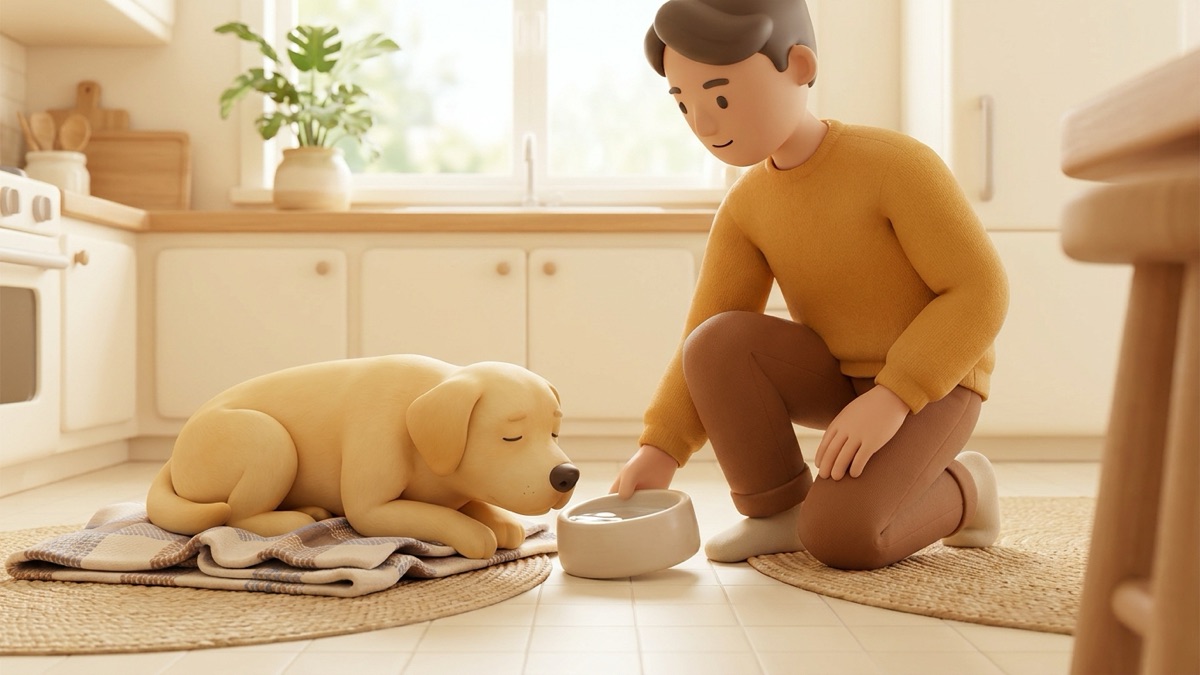
Dog diarrhea and vomiting: why dehydration is the real risk
Diarrhea on its own drains fluid. Vomiting on its own stops a dog from drinking enough. Together they can dehydrate a dog quickly, and vets warn that this can happen if the two carry on for more than 24 hours. Along with the water go body salts (electrolytes), and that imbalance is a problem of its own.
Puppies have the least in reserve. Dogs with kidney or heart disease are more likely to need fluids from the vet.
You can check for dehydration at home in two ways:
- Gums. Lift the lip and touch the gum. It should be light rosy pink and wet. Dry, sticky gums are a sign of dehydration. Pale or white gums are Call a vet now.
- Skin. Gently lift the skin over the shoulder blades and let go. In a well-hydrated dog it springs straight back. If it sinks back slowly, your dog needs a vet.
Sunken, dry-looking eyes and thick saliva are other signs. Do not wait for them.
Good to know
A dog with an irritated stomach is often very thirsty, gulps a full bowl, and brings it straight back up. Tell your vet if that happens. Do not take water away unless your vet tells you to.
Dog throwing up diarrhea: when vomit looks or smells like poop
Some owners mean vomiting and diarrhea together. Others mean something stranger: brown vomit that looks or smells like poop.
There are two common explanations. The simple one is that your dog ate poop, their own or another animal's, and it came back up. If that is a habit, why dogs eat poop explains it. The serious one is a blockage. Vomit with poop-like material in it is on vets' list of warning signs for an intestinal obstruction that need a visit the same day.
Treat it as Call your vet today at the very least. It becomes Call a vet now if the vomiting keeps coming, the belly is sore, your dog is straining with little or no poop coming out, or something is missing from the house: a sock, a toy, a corn cob, a bone.
The color of the vomit is worth a note too. Yellow foam is bile from an empty stomach, covered in dog vomiting yellow. Red blood, or dark specks like coffee grounds, is blood and needs a vet now.
Puppies and unvaccinated dogs
Parvovirus mostly affects young, unvaccinated dogs, most often puppies between 6 weeks and 6 months old. It tends to start with tiredness, then a poor appetite and vomiting, then diarrhea that is foul and often bloody. Any puppy or unvaccinated dog with vomiting and diarrhea should be tested for it, and starting care early improves the odds of recovery.
So the rule is simple. A puppy, or a dog of any age who has not finished their vaccines, with vomiting and diarrhea is Call a vet now. Do not wait to see if it settles. Our guide to parvo poop describes what owners tend to see.
Try it
Not sure which side of the line your dog is on? The should I call the vet checker asks a few questions and gives you one of the four verdicts.
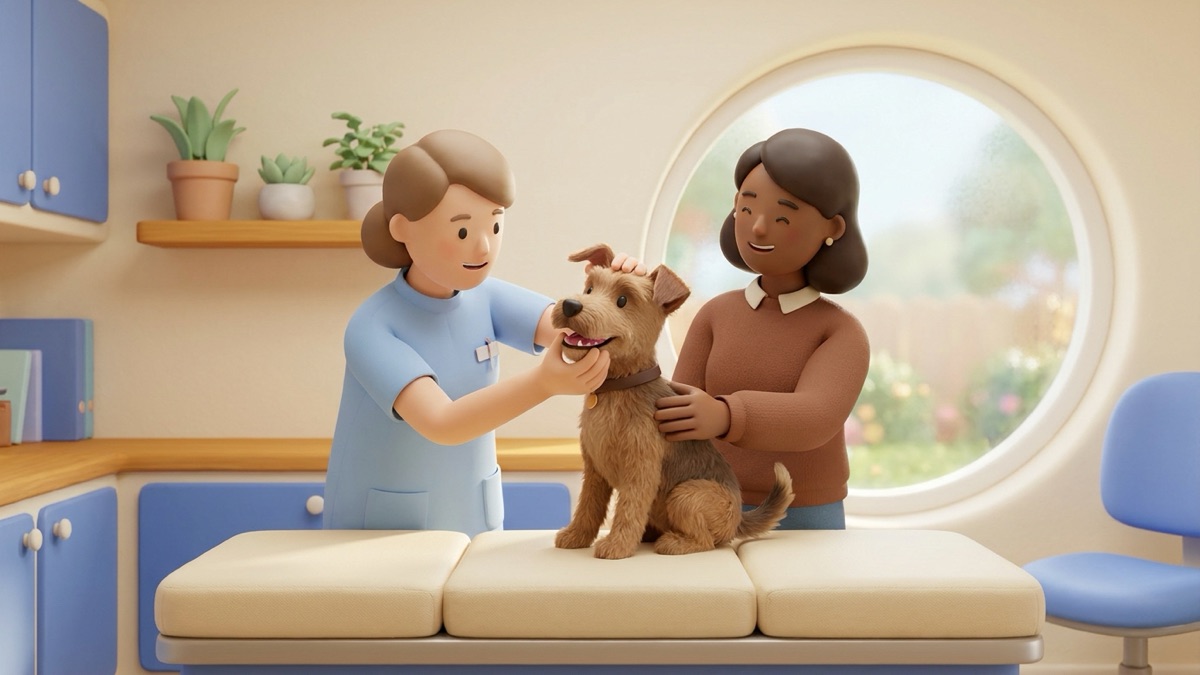
What to do today
- Write down the time of each vomit and each poop. Take a photo of both before you clean up.
- Look at what came up and what came out: food, yellow foam, blood, anything that is not food. Score the poop with the stool score checker if you can.
- Check the gums and do the skin test above.
- Keep fresh water available. Tell your vet if your dog cannot keep it down.
- Call your vet, and ask before you fast your dog or start a bland diet. If they suggest one, what to feed a dog with diarrhea explains how it works.
- Search the house and yard for what your dog could have got into: the trash, a chewed toy, socks, bones, plants, medicines, bait.
- Bag a fresh poop sample in a clean sealed bag or pot for the vet.
- Do not give human medicines. Most do not help and some are harmful.
Tip
Keep a sick dog away from other dogs until your vet has weighed in, pick up poop promptly, and wash your hands after cleaning up. Some causes spread.
When to call the vet
Call a vet now
- A puppy with diarrhea plus vomiting, low energy, or no interest in food.
- A dog who is not fully vaccinated, at any age, with vomiting and diarrhea.
- A lot of fresh blood, raspberry-jam diarrhea, or black, sticky, tar-like poop.
- Blood in the vomit, or vomit that looks like coffee grounds.
- Repeated vomiting with belly pain, or vomiting with no poop coming out.
- A swollen, tight belly with retching that brings nothing up, drooling, or restlessness.
- Pale or white gums, collapse, severe weakness, or not able to stand.
- Any chance your dog ate rat or mouse bait or another poison.
Call your vet today
- Vomiting and diarrhea together in an adult dog who is still alert.
- Diarrhea with a poor appetite or a vomit or two.
- Vomit that looks or smells like poop.
- Your dog swallowed something it should not have, like a toy, sock or bone, but seems fine so far.
- Vomiting or diarrhea that is not clearly better after a day, or keeps coming back.
- An old dog, a very small dog, or a dog with a long-term illness, even with mild signs.
Most cases of simple gastroenteritis improve quickly once the dog has fluids back on board, and the serious ones do best when someone calls early. The PoopScout app reads a photo of the poop for score, color and findings and gives you one of these four verdicts. For everything on the throwing-up side, see the vomiting hub. If it is your cat bringing things up, cat vomiting has the feline rules.
PoopScout guides are general information for pet owners, written from veterinary sources named above. They are not veterinary advice, they do not diagnose, and they can be wrong for your pet. If your dog or cat seems unwell, or you are worried, call your vet. In an emergency, contact your vet or the nearest emergency animal hospital right away.
Questions owners ask
What should I do if my dog is vomiting and has diarrhea?
Call your vet the same day, even if your dog still seems bright. Keep fresh water available, write down each vomit and each poop, check the gums, and ask your vet before you fast your dog or change the food. Call a vet now for a puppy, a dog who is not fully vaccinated, blood, repeated vomiting, a swollen belly or a weak dog.
Why is my dog vomiting and having diarrhea but acting normal?
The usual reason is a mild stomach and gut upset from something eaten, such as table scraps, garbage or a new food. Many of these settle within a day or so. It is still a call to your vet today, because a dog can look bright in the first hours of something more serious and loses fluid quickly from both ends.
When is dog vomiting and diarrhea an emergency?
Call a vet now if your dog is a puppy or is not fully vaccinated, if there is blood in the vomit or a lot of blood in the poop, if the vomiting keeps coming, if the belly is swollen or sore, if the gums are pale, if your dog is weak or flat, or if there is any chance of poison.
Should I stop feeding my dog if he is throwing up and has diarrhea?
Ask your vet first. Vets sometimes advise a short break from food followed by small bland meals, but the right plan depends on your dog's age, size and health. Do not take water away unless your vet tells you to.
Can I give my dog human medicine for vomiting and diarrhea?
No, not unless your vet tells you to. Most human medicines do not help with this, and some are harmful to dogs.
Sources
- VCA Animal Hospitals: Gastroenteritis in Dogs: vcahospitals.com/know-your-pet/gastroenteritis-in-dogs
- VCA Animal Hospitals: Vomiting in Dogs: vcahospitals.com/know-your-pet/vomiting-in-dogs
- VCA Animal Hospitals: Diarrhea in Dogs: vcahospitals.com/know-your-pet/diarrhea-in-dogs
- VCA Animal Hospitals: Acute Hemorrhagic Diarrhea Syndrome in Dogs: vcahospitals.com/know-your-pet/hemorrhagic-gastroenteritis-in-dogs
- VCA Animal Hospitals: Pancreatitis in Dogs: vcahospitals.com/know-your-pet/pancreatitis-in-dogs
- VCA Animal Hospitals: Ingestion of Foreign Bodies in Dogs: vcahospitals.com/know-your-pet/ingestion-of-foreign-bodies-in-dogs
- VCA Animal Hospitals: Gastric Dilatation and Volvulus in Dogs: vcahospitals.com/know-your-pet/gastric-dilatation-and-volvulus-in-dogs
- VCA Animal Hospitals: Testing for Pallor: vcahospitals.com/know-your-pet/testing-for-pallor
- Merck Veterinary Manual (Dog Owners): Vomiting in Dogs: www.merckvetmanual.com/dog-owners/digestive-disorders-of-dogs/vomiting-in-dogs
- Merck Veterinary Manual (Dog Owners): Disorders of the Stomach and Intestines in Dogs: www.merckvetmanual.com/dog-owners/digestive-disorders-of-dogs/disorders-of-the-s
- Cornell Riney Canine Health Center: Vomiting: www.vet.cornell.edu/departments-centers-and-institutes/riney-canine-health-cente
- Cornell Riney Canine Health Center: Parvovirus, transmission to treatment: www.vet.cornell.edu/departments-centers-and-institutes/riney-canine-health-cente
- American Kennel Club: A Survival Guide for Dog Diarrhea: www.akc.org/expert-advice/health/dog-diarrhea/
- American Kennel Club: Warning Signs of Dehydration in Dogs: www.akc.org/expert-advice/health/warning-signs-dehydration-dogs/
- American Kennel Club: Intestinal Blockage in Dogs: www.akc.org/expert-advice/health/intestinal-blockage-in-dogs/
- ASPCA Animal Poison Control Center: www.aspca.org/pet-care/animal-poison-control
Read next
Litter box problems
Why Is My Cat Pooping Outside the Litter Box?
Worms & parasites
White Specks in Dog Poop: Rice, Seeds or Worms?
Frequency & what is normal
How Often Should a Dog Poop?
Dog diarrhea
What to Feed a Dog With Diarrhea (Bland Diet)
Dog poop colors
Orange Dog Poop: Causes and What to Do
Cat diarrhea
Cat Diarrhea: Causes and What to Do