
Mucus in Cat Poop: Causes and When to Worry
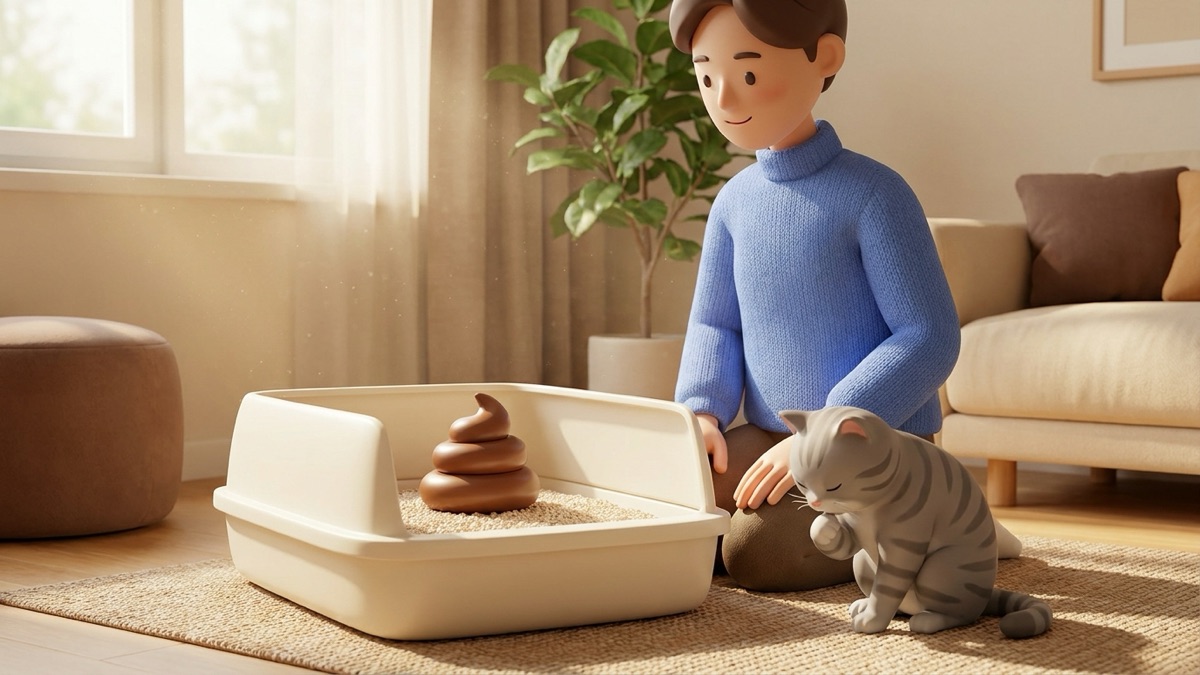
You went to scoop the box and one of the poops is wearing a shiny, jelly-like coat. Or there is a blob of clear slime in the litter beside it. Your cat, meanwhile, is washing a paw as if nothing happened. Here is what that slime usually means, and how fast to act.
Quick answer
Mucus in cat poop usually means the large intestine (colon) is irritated and making extra slime. A sudden food change, stress, parasites such as Giardia, coccidia or Tritrichomonas, and constipation are common causes. A little mucus once, in a cat who feels fine, is a watch. Mucus that keeps coming, or comes with diarrhea, blood or straining, needs a vet.
Scout's read
A small amount of mucus once, in an adult cat who is eating, drinking and using the box as usual, is a watch for 24 to 48 hours. Mucus that keeps showing up, or mucus with diarrhea, blood or straining, is Call your vet today. A lot of blood, a sick kitten, or a cat straining with little or nothing coming out is Call a vet now.
Key takeaways
- A coating of mucus you can see means the colon is making more of it than usual, which is a sign of irritation.
- The everyday triggers are a sudden food change and stress. The hidden ones are parasites, and most are too small to see.
- Jelly-like mucus with bright red blood points to the large intestine. A small streak is a same-day call. A lot of blood is Call a vet now.
- Mucus on small, hard, dry pieces can mean constipation. A cat, especially a male, who strains and passes little or nothing needs a vet now.
- Cats hide illness well. If the mucus lasts more than a day or two, a fecal test is the next step.
What mucus in cat poop looks like
Mucus is a clear, whitish or slightly yellow slime. It shows up as a shiny coating over the stool, jelly-like strands at one end, or a blob of clear jelly on its own in the litter.
Litter sticks to anything wet, so a slimy poop often comes out of the box wearing far more litter than usual. If a small clump turns out to be jelly rather than pee, look closer.
Healthy cat poop has no coating. It is brown, formed and easy to scoop, which is a 2 on the 1 to 7 stool scale many vets use.
Why is there mucus in my cat's poop?
The lining of the colon makes a little mucus all the time to help the poop slide along. When that lining is irritated or inflamed it makes a lot more, and the extra ends up on the outside of the poop.
Vets call an inflamed colon colitis. Cats with colitis tend to strain, go more often, and pass small amounts of mucus-laden poop, sometimes with a little bright red blood. Vomiting and weight loss are uncommon with it, which is why many of these cats look well.
| Likely cause | What else you might notice | What it usually means for you |
|---|---|---|
| A sudden food change or a stolen snack | Soft poop for a few days | Keep an eye; go back to the usual food |
| Stress (a long car trip, a stay at the clinic) | A brief bout of loose poop | Keep an eye |
| Parasites (Giardia, coccidia, Tritrichomonas) | Soft, smelly poop that comes and goes | Call your vet today, bring a sample |
| Constipation | Small, hard, dry pieces, straining | Call your vet today; now if little or nothing comes out |
| Long-running gut inflammation | Vomiting or weight loss that comes and goes | Book a vet visit |
| Gut infection | Diarrhea, vomiting, low energy | Call your vet today; now for a kitten |
Parasites are the reason a vet takes mucus seriously even in a happy cat. Giardia is more common in cats under a year old and in homes with several cats. Coccidia mostly troubles kittens, where it causes diarrhea that often contains mucus. Tritrichomonas causes smelly diarrhea with mucus or blood, mostly in young cats and cats from shelters or catteries. All three are microscopic. Our guide to worms in cat poop covers the parasites you can see.
Inflammatory bowel disease, an ongoing irritation of the gut lining, is the long-running cause. Vets see it most in middle-aged and older cats, and its signs often come and go for weeks.
Cat poop with mucus, but your cat is acting normal
This is the most common version. A cat with a little mucus on a formed poop, who is eating, grooming and playing as usual, most often has a mildly irritated colon that settles by itself.
The pattern that fits a watch:
- A small amount of clear or whitish mucus, once or twice.
- The poop underneath is formed, a 2 to 4 on the scale.
- No blood, no straining, no vomiting, in an adult cat who is bright and hungry.
Watch the next few poops over 24 to 48 hours, and keep the food exactly the same. It moves to Call your vet today, even if your cat seems well, when:
- The mucus is still there after a day or two.
- It comes with diarrhea, small poops passed many times a day, or streaks of red blood.
- Your cat is a kitten. Kittens have less in reserve and pick up parasites easily.
A well cat still gets a call for two reasons. Cats often do not look sick when they are. And the parasites behind mucus do not make every cat feel ill: most cats carrying Giardia show no illness, and many cats with Tritrichomonas stay active and playful.
Good to know
A photo and a description cannot show everything. Giardia is shed on and off, so a vet may need more than one sample, and a routine fecal test is unlikely to find Tritrichomonas. Tell your vet exactly what you saw.
Cat pooping a jelly-like substance with blood
Clear or pinkish jelly with streaks of bright red blood looks alarming, and the two together point to the large intestine. Mucus, fresh blood, straining and urgent, frequent trips are the signs vets group together as large bowel diarrhea.
How fast to act depends on how much blood there is and how your cat is doing:
- A small streak of fresh blood with mucus, in an adult cat who is bright and eating: Call your vet today.
- Diarrhea that is mostly blood, or blood with vomiting, weakness or pale gums: Call a vet now.
- Any blood in a kitten's poop: at least Call your vet today. With vomiting, low energy or no interest in food, it is Call a vet now. Panleukopenia, a serious virus that hits kittens and unvaccinated cats hardest, is the reason.
- Black, sticky, tar-like poop: Call a vet now. That is digested blood from higher up in the gut.
Our guide to blood in cat poop goes through red versus black. If the poop is loose as well as slimy, the rules in cat diarrhea apply too.
Mucus on a hard, dry poop
Mucus is not only a diarrhea sign. A constipated cat strains hard, and some pass a very small amount of watery poop, with or without mucus, or a little blood from the effort. In the box you may find small, hard, dry pieces with a slimy film.
Straining or crying in the box and going in and out again and again are the signs that fit. Call your vet if your cat has not pooped for 2 to 3 days, and sooner if they are straining, sore or off their food. Our guide to a cat straining to poop walks through it.
Heads up
A cat, especially a male, who keeps going back to the box, strains, and passes little or nothing may not be constipated at all. A urinary blockage looks the same from the outside and can kill within a day or two. If you cannot tell whether your cat is straining to poop or to pee, treat it as Call a vet now.
Where mucus sits on the 1 to 7 stool scale
The scale measures how much water is in the poop, from hard pellets at 1 to watery puddles at 7. Mucus is a coating, so it can sit on any score. The score underneath tells you how worried to be.
| Score underneath | What it looks like | Mucus on top often means | Verdict |
|---|---|---|---|
| 1 | Hard, dry pellets | Straining from constipation | Call your vet today; now if little or nothing comes out |
| 2 to 3 | Formed log | Mild irritation, often food or stress | Keep an eye |
| 4 to 5 | Soggy log or soft piles | Irritation with soft stool, think parasites | Keep an eye; call past a day or two |
| 6 to 7 | No shape, or watery | Diarrhea with an inflamed colon | Call your vet today; now with a lot of blood |
Try it
Not sure what number you are looking at? The stool score checker walks you through the 1 to 7 scale with plain descriptions, so you can score a poop in a few seconds.
Dogs get mucus for many of the same reasons, covered in mucus in dog poop. For everything slimy, jelly-like, soft or stringy in one place, see the mucus, texture and shape hub.
What to do today
- Take a photo before you scoop, in good light. Get close on the mucus and on any blood.
- Note the time, the score underneath, and how many poops there have been today.
- Check the pee clumps. Tiny clumps or none, with straining, is Call a vet now.
- Think back over the last few days: a new food or treat, a trip, a new cat, anything chewed or swallowed.
- Keep fresh water out and keep the food the same.
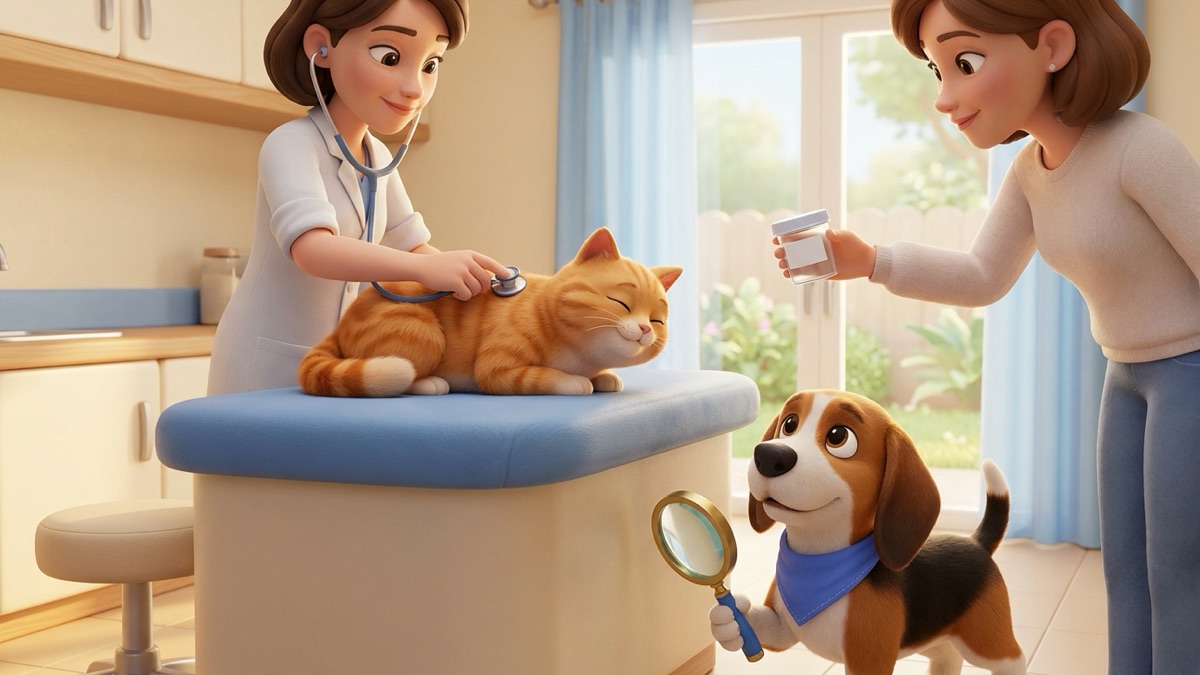
- Bag a fresh sample if you might see the vet: a piece about an inch long, as free of litter as you can manage, in a clean sealed pot. It keeps in the fridge, away from food, for up to 24 hours.
- Check the gums. Light rosy pink is normal. Pale or white gums are Call a vet now.
- Do not give human medicines. Some over-the-counter ones can harm cats in particular.
When to call the vet
Call a vet now
- A cat, especially a male, straining in the litter box with little or nothing coming out.
- A lot of fresh blood, or diarrhea that is mostly blood.
- Black, sticky, tar-like poop.
- A kitten with diarrhea plus vomiting, low energy, or no interest in food.
- Pale or white gums, collapse, or severe weakness.
- Repeated vomiting with belly pain, or vomiting with no poop coming out.
Call your vet today
- Mucus that keeps showing up for more than a day or two, or keeps coming back.
- Mucus with straining, or a small streak of fresh blood, in a cat who is otherwise well.
- Diarrhea lasting more than 24 to 48 hours.
- Any mucus or loose poop in a kitten, even a bright and playful one. Our kitten diarrhea guide explains why.
- No poop for 2 to 3 days, or straining that only produces small, hard pieces.
- A cat who has refused food for more than a day.
Mucus on your cat's poop is the colon asking for a little attention, and most of the time the same food, fresh water and a calm couple of days are all it takes. The PoopScout app reads a photo for score, color and findings such as mucus, and gives you one of the same four verdicts you have read here. Whatever you use, pair what is in the box with how your cat is acting, and let your vet look for the things a photo cannot show.
PoopScout guides are general information for pet owners, written from veterinary sources named above. They are not veterinary advice, they do not diagnose, and they can be wrong for your pet. If your dog or cat seems unwell, or you are worried, call your vet. In an emergency, contact your vet or the nearest emergency animal hospital right away.
Questions owners ask
Is mucus in cat poop normal?
A healthy cat poop has no visible coating. A small amount of clear or whitish mucus once, in an adult cat who is eating and acting normally, is usually a keep an eye on it situation for a day or two. Mucus that keeps showing up, or comes with diarrhea, blood or straining, is a call to your vet today.
Why is my cat pooping a jelly-like substance with blood?
Jelly-like mucus with bright red blood points to an irritated large intestine, which vets call colitis. Parasites, a diet change, stress and infections are common triggers. A small streak in a cat who is bright and eating is a call to your vet today. A lot of blood, or blood with vomiting, weakness or a sick kitten, means call a vet now.
Can stress cause mucus in cat poop?
Yes. A stressful event such as a long car trip or a stay at the clinic can cause a brief bout of loose poop in a cat, and mucus can come with it. It should pass within a day or two. If it does not, or your cat seems unwell, call your vet.
Can a food change cause mucus in cat poop?
It can. An abrupt change of food can give a cat soft poop or diarrhea for a few days, and an irritated colon makes extra mucus. Go back to the usual food and make any future change slowly over at least a week. Call your vet if the mucus is still there after a day or two.
Should I bring a poop sample to the vet for mucus?
Yes. Several of the parasites behind mucus in cats are microscopic and only show on a fecal test, and some need a specific test. Bring a fresh piece in a clean sealed pot or bag, kept cool, on the same day if you can.
Sources
- Merck Veterinary Manual (Cat Owners): Disorders of the Stomach and Intestines in Cats: www.merckvetmanual.com/cat-owners/digestive-disorders-of-cats/disorders-of-the-s
- Merck Veterinary Manual (Professional): Colitis in Small Animals: www.merckvetmanual.com/digestive-system/diseases-of-the-large-intestine-in-small
- Cornell Feline Health Center: Diarrhea: vet.cornell.edu/departments-centers-and-institutes/cornell-feline-health-center/
- Cornell Feline Health Center: Gastrointestinal Parasites of Cats: www.vet.cornell.edu/departments-centers-and-institutes/cornell-feline-health-cen
- Cornell Feline Health Center: Inflammatory Bowel Disease: www.vet.cornell.edu/departments-centers-and-institutes/cornell-feline-health-cen
- Cornell Feline Health Center: Feline Lower Urinary Tract Disease: vet.cornell.edu/departments-centers-and-institutes/cornell-feline-health-center/
- Cornell Feline Health Center: Feline Panleukopenia Virus: www.vet.cornell.edu/departments-centers-and-institutes/cornell-feline-health-cen
- Cornell Feline Health Center: Feline Behavior Problems: House Soiling: vet.cornell.edu/departments-centers-and-institutes/cornell-feline-health-center/
- VCA Animal Hospitals: Constipation in Cats: vcahospitals.com/know-your-pet/constipation-in-cats
- VCA Animal Hospitals: Diarrhea in Cats: vcahospitals.com/know-your-pet/diarrhea-in-cats
- VCA Animal Hospitals: Tritrichomonas in Cats: vcahospitals.com/know-your-pet/tritrichomonas-in-cats
- VCA Animal Hospitals: Importance of Fecal Tests in Dogs and Cats: vcahospitals.com/resources/preventive/fecal-tests-for-dogs-and-cats
- Companion Animal Parasite Council: Trichomoniasis: capcvet.org/guidelines/trichomoniasis/
- Companion Animal Parasite Council: Giardia: capcvet.org/guidelines/giardia/
- Nestle Purina Fecal Scoring System (hosted by University of Missouri Veterinary Health Center): vhc.missouri.edu/wp-content/uploads/2020/07/Nestle-Purina-Fecal-Scoring-System.p
Read next
Mucus, texture & shape
Mucus in Dog Poop: Causes and When to Worry
Dog diarrhea
What to Feed a Dog With Diarrhea (Bland Diet)
Blood in poop
Why Is My Dog Pooping Blood?
Dog diarrhea
My Dog Has Diarrhea but Is Acting Fine
Dog poop colors
Why Is My Dog's Poop Black?
Vomiting (adjacent)
Dog Vomiting and Diarrhea at the Same Time