
Guides Eating, rolling, burying
Why Do Dogs Eat Poop? (And How to Stop It)
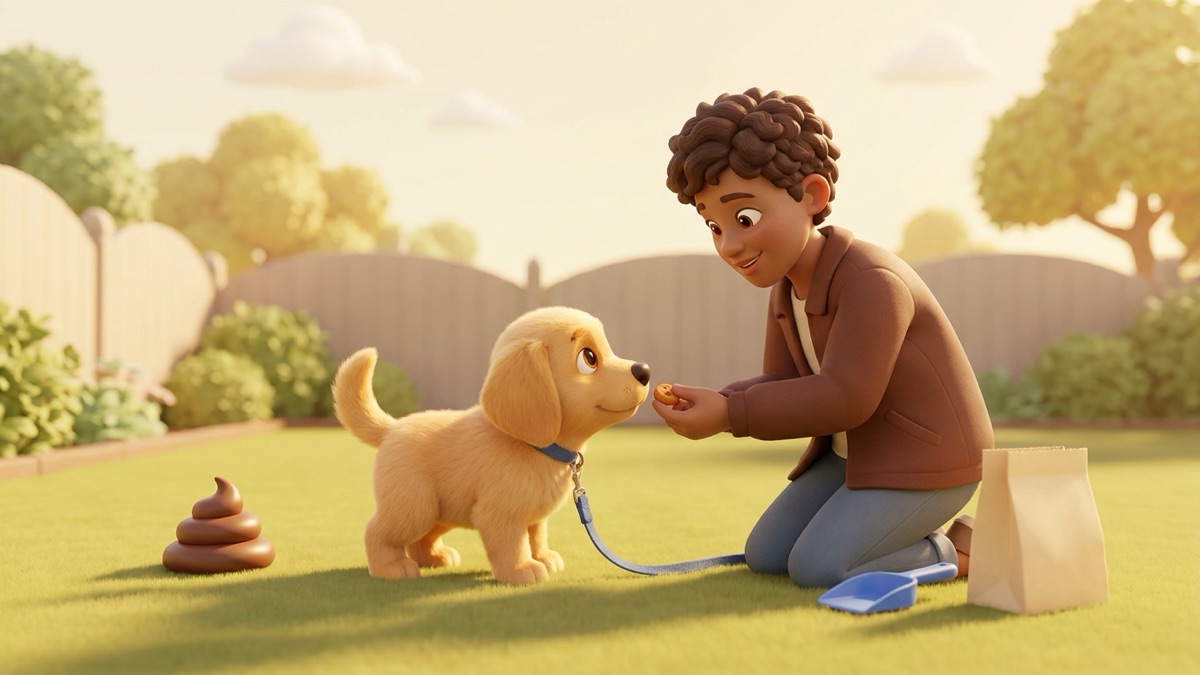
You turn around in the yard and your dog is finishing something that was not in their bowl. It is gross, and the first question is always the same: is something wrong with them? Take a breath. This is one of the most common things dog owners ask about, and in most dogs it is a habit, not a disease.
Quick answer
Most dogs eat poop out of instinct and habit, not illness. Mother dogs clean up after puppies, puppies copy it, and some dogs simply find poop (especially cat poop and fresh dog poop) appealing. A sudden new habit, or poop eating with weight loss, loose stool or a huge appetite, is worth a vet check for a medical cause.
Scout's read
In a healthy adult dog who is eating well and keeping weight on, poop eating is almost always behavior, not sickness. It becomes Call your vet today if it starts suddenly in an adult, or comes with diarrhea, weight loss, vomiting or a dog who seems hungry all the time.
Key takeaways
- Eating poop has a name, coprophagia, and it is common: about one dog in six does it regularly, according to a large UC Davis survey.
- Dogs strongly prefer fresh poop, which fits the theory that the habit is an inherited den-cleaning instinct from wolves.
- Medical causes are the minority, but anything that leaves a dog hungry or unable to absorb food can push them toward poop.
- Management works better than remedies. A clean yard, a leash, and a reward for leaving it alone beat every powder and spray.
- Punishment makes it worse. Never rub a dog's nose in poop.
Why do dogs eat poop? What the research says
In 2018 a team at the University of California, Davis published the largest study on it so far: two web surveys with more than three thousand usable responses from dog owners. The headline numbers: 16 percent of dogs had been seen eating poop six or more times, and about 23 percent at least once. Poop eating was not linked to diet, age, how easy the dog was to house-train, or compulsive behavior. Terriers and hounds were somewhat more likely to do it, and so were dogs in multi-dog homes.
Two findings stood out. Poop eaters were far more often described as greedy eaters: about half, compared with just over a quarter of dogs who did not eat poop. And dogs overwhelmingly went for fresh poop: more than four in five frequent eaters took only stool that was no more than two days old.
That freshness detail is the clue. The researchers proposed that poop eating is a leftover instinct from wolves, who keep the den clean by eating fresh droppings before the parasite eggs in them become infective, which takes a couple of days. Your dog may be running an ancient hygiene program. It is not nicer to watch, but it is not a sign that something is broken.
Why does my dog eat poop? The everyday reasons
Instinct sets the stage, but everyday reasons decide whether a particular dog does it. Vets see the same handful again and again.
| Reason | What it looks like | What helps most |
|---|---|---|
| Mothers and puppies | A nursing mother cleans the whelping area; puppies copy her and explore poop with their mouths | Time, a clean pen, rewards for leaving it |
| Scavenging and taste | Cat poop, rabbit or deer droppings, and other dogs' poop eaten on walks or from the litter box | Block access, leash, teach "leave it" |
| Greedy eating | A dog who bolts meals and hunts for anything edible | Slow feeders, measured meals, enrichment |
| Multi-dog home | One dog eats another's poop in the shared yard | Pick up right away, supervise yard time |
| Boredom or confinement | A dog left alone in a small space with their own poop | More exercise, more company, cleaner space |
A mother dog eats her puppies' poop for the first few weeks to keep the nest clean. Puppies watch, and many try it while they are exploring the world with their mouths. Most lose interest as they grow, especially when their area is kept clean and they are rewarded for leaving poop alone.
Dogs are also scavengers, and poop from cats, rabbits, deer and horses often smells like food to them. Cat poop is the big one: high in protein, sitting in a tray at nose height. The answer there is access control, not training. A baby gate, a cat flap the dog cannot fit through, or a covered box usually ends it.
The greedy eaters in the survey are the dogs who inhale dinner and spend the day looking for more. They do well with a slow-feeder bowl, puzzle toys, and meals split into smaller portions. In a multi-dog home, one dog's poop is another dog's snack, so the reliable fix is picking up as soon as it lands.
Why do dogs eat their own poop?
Eating their own stool is the same instinct with a smaller menu: it is fresh, it is right there, and nothing bad has ever happened. A few things nudge a dog toward their own poop in particular.
- Confinement. A dog left for long stretches in a crate, pen or kennel with their poop may eat it to keep their space clean, exactly the den-cleaning instinct at work.
- Punishment for accidents. A dog who has been scolded or had their nose rubbed in an accident may learn that poop leads to trouble, and remove it the only way they can. VCA calls nose-rubbing outmoded, inhumane and useless, and notes it can make poop eating worse.
- Undigested food in the poop. If a dog is not digesting well, the poop still smells like food. This is where a medical check comes in.
When dog eating poop can mean a medical problem
Medical causes are the minority, but they are why your vet will want to hear about a new habit. Anything that makes a dog hungrier than normal, or stops them absorbing what they eat, can push them toward poop.
- Not enough food, or a poorly digestible diet. A dog who is underfed, or eating a food they cannot break down well, stays hungry.
- Malabsorption. When the gut cannot absorb nutrients, dogs lose weight despite a good appetite and pass loose, bulky poop. Undigested food, greasy or pale poop are the visible clues.
- Pancreas problems. When the pancreas does not make enough digestive enzymes, poop comes out pale, loose, voluminous and foul, and the dog is ravenous while losing weight.
- Parasites. Worms compete for nutrients, and a dog who eats poop is also more likely to pick them up, so this runs both ways. Worms you can see in the poop are only part of the story; most show up only on a fecal test.
- Conditions and medicines that drive appetite. VCA lists diabetes, Cushing's disease, thyroid disease and steroid medications as drivers of appetite and sometimes stool eating.
The pattern to watch for is poop eating plus something else: weight loss, loose or greasy poop, constant hunger, drinking more, or vomiting. A long-standing habit in a dog who is bright, fit and passing normal poop is a different story.
Good to know
A healthy poop is firm, chocolate brown, and a 2 on the 1 to 7 stool scale vets use. If your poop eater is producing that, digestion is probably not the reason. If the poop is pale, soft or greasy, bring a fresh sample to the vet.
Is it dangerous for a dog to eat poop?
Eating their own poop rarely harms a healthy dog. The risks come from whose poop it is and what is in it.
- Parasites. Roundworm, hookworm, whipworm, Giardia and coccidia all spread through poop. A dog who eats other animals' poop is sampling every parasite in the neighborhood, and roundworm can also infect people, especially children. The Companion Animal Parasite Council recommends fecal exams at least twice a year for adult dogs; a known poop eater deserves the top end of that.
- Hygiene at home. A dog who has just eaten poop and then licks a toddler's face is a real route for parasites to reach people. Wash hands and keep faces apart for a while.
Heads up
If what your dog ate might have been rat or mouse bait rather than poop, or came from a lawn just treated with chemicals, call your vet or ASPCA Animal Poison Control at (888) 426-4435 (a fee may apply), even if they seem fine.
How to stop a dog from eating poop
Here is the honest part. In the UC Davis survey, owners reported that behavior-modification methods worked for roughly 1 to 2 percent of dogs, and commercial deterrent products for 0 to 2 percent. The best performer was teaching "leave it", at about 4 percent. That does not mean nothing works. The things that work are about removing the opportunity, which owners rarely count as a "method".
- Pick up immediately. Go out with your dog, let them finish, and scoop before they turn around. This alone solves most yard cases. Dog poop disposal is easier with a scoop and bags kept by the door.
- Leash walks for a while. Keep the leash short enough that you reach the poop first. A head halter gives gentle control of where the nose goes.
- Reward right after pooping. As soon as your dog finishes, call them to you and give a high-value food reward. Leaving the poop and coming to you starts to pay better than eating it.
- Teach "leave it". Start indoors with a boring object, reward the look-away, then build up to poop outside. It takes weeks, not days.
- Block the litter box. Baby gate, cat flap, covered box, or a box on a surface the cat can reach and the dog cannot.
- Feed well and feed slowly. Measured meals, two or three times a day, from a slow feeder or puzzle toy. Ask your vet whether the current food suits your dog.
- Fix the boredom. More walks, more sniffing, more training games, less time alone in a small space with their own poop.
- See the vet once. A fecal test and a basic exam rule out the medical causes above, and it is the place to ask about parasite prevention.
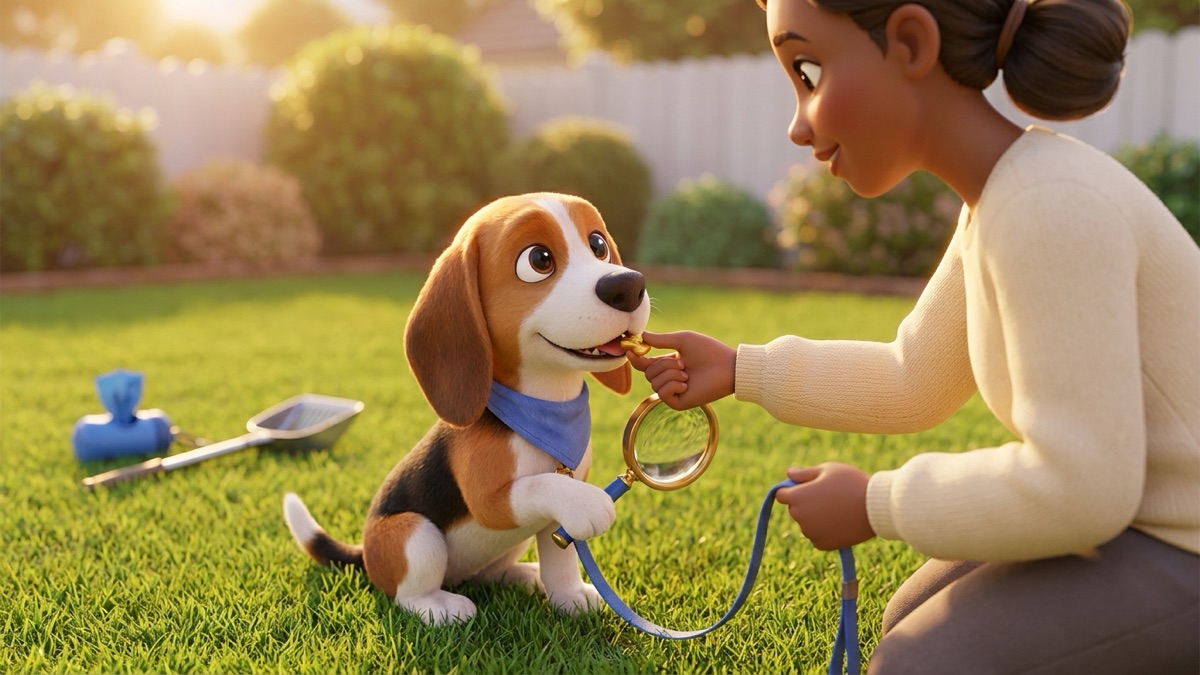
How to stop a dog from eating poop with home remedies
Search for this and you will find pineapple, pumpkin, meat tenderizer, yogurt, and a long list of "add this to the food so the poop tastes bad" ideas. Some are harmless. None has good evidence behind it.
| Home remedy | The idea | What the evidence says |
|---|---|---|
| Pineapple or pumpkin in meals | Makes the poop taste worse | No controlled evidence. Owner-reported success close to zero |
| Meat tenderizer or enzyme powders | Helps digestion so poop smells less like food | May help a dog with a real digestive problem (a vet's call). Not a fix for habit |
| Taste-deterrent products | Bitter or spicy additive | VCA notes most dogs tolerate the taste or learn to avoid only the treated poop |
| Punishment or nose-rubbing | Teach the dog a lesson | Makes it worse. Dogs learn to eat faster or hide it |
If you want to try a food additive, check with your vet first, keep the amount small, and run it alongside the management steps. If the poop eating stops, it was probably the management. The one "remedy" worth taking seriously is a vet visit: vets sometimes recommend a more digestible food, a higher-fiber food, or a digestive enzyme supplement for a dog whose pancreas is not keeping up. Those are answers to a specific problem, and they are the vet's call.
What to do today
- Note when it happens: after meals, on walks, from the litter box, in the yard. The pattern points to the fix.
- Look at your dog's own poop. Firm, brown and formed is reassuring. Pale, greasy, loose, or full of undigested food is a reason to call the vet.
- Check your dog over. Weight loss, a potbelly, scooting, or constant hunger raise the odds of a medical cause.
- Pick up every poop in the yard now, and start the "finish, call, reward, scoop" routine from the next walk.
- Move the litter box out of reach.
- Wash your hands, and keep your dog's face away from small children's faces for a while after a poop snack.
- Do not punish or rub their nose in it, and do not give any supplement or human medicine unless your vet says so.
When to call the vet
Most poop eating is a management problem, not a medical one. These are the exceptions.
Call a vet now
- Your dog may have eaten rat or mouse bait, or anything from a lawn that was just treated with chemicals.
- A puppy, or a dog who is not fully vaccinated, with vomiting and diarrhea.
- Black, sticky, tar-like poop, a lot of fresh blood, or raspberry-jam diarrhea.
- Pale or white gums, collapse, or severe weakness.
Call your vet today
- Poop eating that starts suddenly in an adult dog who never did it before.
- Poop eating with weight loss despite a good appetite, or a dog who seems hungry all the time.
- Gray, greasy, pale and bulky, or loose poop that keeps coming.
- Worms, or rice-like bits, in the poop or on the fur around the bottom.
- Diarrhea lasting more than 2 days, or any diarrhea in a puppy.
- A small streak of fresh blood in the poop, or mucus with straining, in a dog who is otherwise well.
- A poop eater who has not had a fecal test this year.
Try it
Not sure whether tonight is a wait or a call? Walk through the should I call the vet checker. It asks about the poop and about your dog, and gives you one of the four verdicts.
Poop eating is one of the oldest dog behaviors and one of the most fixable with patience. Rule out the medical causes once, then win on management: scoop fast, reward the turn-away, block the litter box, and give a greedy dog more to do. The poop behavior guides cover eating, rolling and burying, including why cats bury theirs. The PoopScout app reads a photo of your dog's poop for score, color and findings and gives you one of these four verdicts.
PoopScout guides are general information for pet owners, written from veterinary sources named above. They are not veterinary advice, they do not diagnose, and they can be wrong for your pet. If your dog or cat seems unwell, or you are worried, call your vet. In an emergency, contact your vet or the nearest emergency animal hospital right away.
Questions owners ask
Is it normal for dogs to eat poop?
It is common. In a large UC Davis survey, about one dog in six was seen eating poop six or more times, and nearly one in four at least once. Mother dogs clean up after their puppies, and many puppies copy it. It is unpleasant, but in a healthy adult dog it is usually a habit rather than an illness.
Can my dog get sick from eating poop?
Yes, sometimes. Poop from other dogs, cats and wildlife can carry parasites and their eggs, and some of those can pass to people. A dog who eats poop should have regular fecal tests at the vet, and you should wash your hands after any contact with their mouth.
Do dogs grow out of eating poop?
Many puppies do. The habit often fades as they mature and as you keep the yard clean and reward them for leaving poop alone. Some adult dogs keep it up for life, and the same survey found that age did not predict which adult dogs were poop eaters.
Does pineapple or pumpkin stop a dog from eating poop?
There is no good evidence that it does. Owners in the UC Davis survey reported that food additives and commercial deterrent products worked for almost none of their dogs. A clean yard, a leash and a well-timed reward do far more. Ask your vet before adding anything to the diet.
Why does my dog eat cat poop?
Cat poop is rich in protein and smells like food to a dog, so the litter box is a buffet. It is also a parasite risk. The fix is access, not punishment: put the box behind a baby gate, in a room with a cat flap, or inside a covered box the dog cannot reach into.
Sources
- Hart BL, Hart LA, Thigpen AP, Tran A, Bain MJ. The paradox of canine conspecific coprophagy. Veterinary Medicine and Science, 2018 (UC Davis): pmc.ncbi.nlm.nih.gov/articles/PMC5980124/
- VCA Animal Hospitals: Dog Behavior Problems, Coprophagia: vcahospitals.com/know-your-pet/dog-behavior-problems-coprophagia
- American Kennel Club: Why Dogs Eat Poop: www.akc.org/learn/dog-health/why-dogs-eat-poop/
- Companion Animal Parasite Council: General Guidelines: capcvet.org/guidelines/general-guidelines/
- Companion Animal Parasite Council: Ascarid (Roundworms): capcvet.org/guidelines/ascarid/
- VCA Animal Hospitals: Importance of Fecal Tests in Dogs and Cats: vcahospitals.com/resources/preventive/fecal-tests-for-dogs-and-cats
- VCA Animal Hospitals: Malabsorption and Bacterial Overgrowth in Dogs: vcahospitals.com/know-your-pet/malabsorption-bacterial-overgrowth-in-dogs
- Merck Veterinary Manual (Dog Owners): Pancreatitis and Other Disorders of the Pancreas in Dogs: www.merckvetmanual.com/dog-owners/digestive-disorders-of-dogs/pancreatitis-and-o
Read next
Blood in poop
Why Is My Dog Pooping Blood?
Worms & parasites
Worms in Dog Poop: What They Look Like
Dog diarrhea
Dog Diarrhea: Causes, What to Do, When to Worry
Blood in poop
Blood in Cat Poop: What It Means and When to Worry
Mucus, texture & shape
Mucus in Dog Poop: Causes and When to Worry
Litter box problems
Why Is My Cat Pooping Outside the Litter Box?